• Skip to primary navigation
  • Skip to main content

Western Chandelier

  • Buying Guides
  • Styles & Trends
    • Bathroom Lights
    • Ceiling Fans
    • Ceiling Lights
    • Lamps
    • LED Lights
    • Outdoor Lights
    • Smart Lights
    • Wall Lights
  • Wellness & Safety
  • Shop Products

admin

Ceiling Fan Terminology Explained

Ceiling Fan Terminology Explained

by admin · May 10, 2023

A Helpful Glossary of Common Ceiling Fan Terms

If you’re shopping for ceiling fans and it’s starting to feel like the descriptions are written in code, don’t worry! We’re here to solve the mystery with a list of basic terms you’ll need to know when looking for the right ceiling fan.

Ceiling Fan Types

Ceiling fans are most often categorized by their motor type, mount type, and/or weather rating. 

Motors

AC and DC Motors

AC motors (alternating current motors) are the most popular ceiling fan motor. They’re typically less expensive than DC motors, which is great for budget buyers. They are relatively energy efficient, are very reliable, and come with around three to four different fan speeds. 

DC motors (direct current motors) are a newer technology and often use a remote instead of a wall switch. DC motors make a quieter, more powerful fan with more speed options and are more efficient than AC motors. 

Dual Motor

Dual motor fans have two adjustable fan heads attached to a central motor. Each head is adjustable to its own speed and angle. 

High-Velocity Motor

A high-velocity fan is a powerful fan. It produces a higher-than-normal amount of airflow, providing you with a stronger breeze. 

Mounts

Downrod/Shank/Extension Rod

The multiple terms for this accessory are purely regional, and all mean the same thing– the rod or bar installed between the ceiling and the fan. Downrods can be used in many rooms but create the most impact in rooms with high ceilings. Not only do they pull the eye upwards and make the room feel bigger, but they also bring the air circulation closer to you.

Standard Mount

This type of mounting system is for level ceilings. Standard mounts usually come with a 3- to 5-inch downrod, so the fan slightly hangs down into the space.

Hugger or Flush Mount

These are perfect for low ceilings and tall people. Huggers are mounted against the ceiling and don’t use a downrod. Depending on the ceiling height, huggers or flush mount fans can help the ceiling seem higher while keeping your air circulated and fresh.

Low-Profile Fan 

For a fan to be considered low-profile, it must hang down less than 12 inches from the ceiling. Most low-profile fans are flush mounts, but some fans with short downrods are small enough to qualify as low-profile as well.

Sloped Mount 

A sloped mount is a mounting system that includes a downrod that allows the ceiling fan to be installed on a vaulted or slanted ceiling. The base is designed to let the downrod and fan hang at an angle when mounted so that the fan will be perpendicular to the floor.

Rating

Wet Rated or Outdoor Rated Fans 

Outdoor or wet rated fans are designed to withstand direct contact with rain and snow. Carefully read the packaging of your outdoor fan because not all fans can handle the same weather exposure. If you live in a particularly wet or stormy area, you’ll need a tougher outdoor fan.

Industrial and Commercial Fans

Industrial fans have powerful motors and curved blades, and they can run continuously, making them ideal for large, open areas like warehouses and gyms. Commercial fans are heavier-duty than standard fans and more aesthetically pleasing than industrial fans. They’re commonly found in schools, businesses, and restaurants.
Ceiling Fan Measurements 

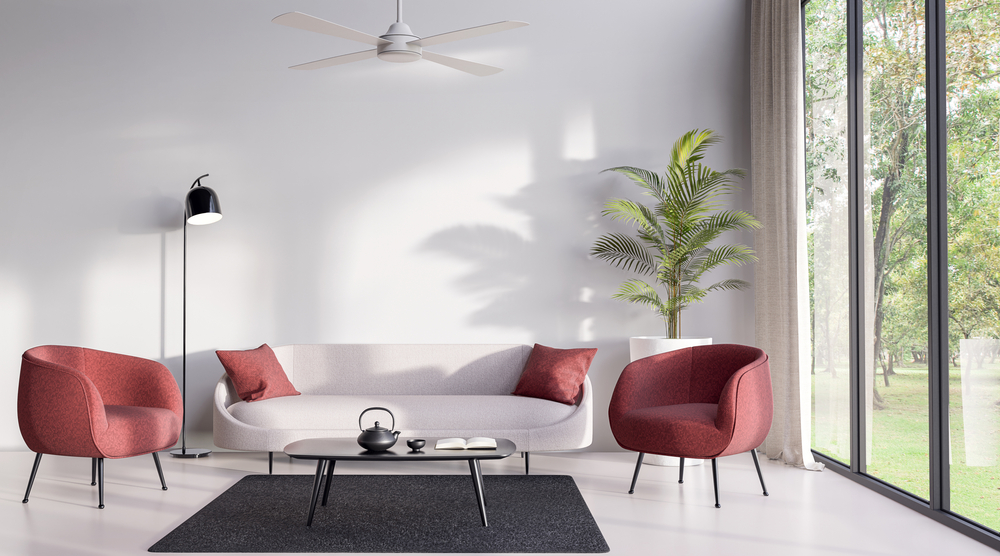
This section covers the most common measurements used to describe a ceiling fan’s function and size.

Airflow (CFM)

Cubic feet per minute (CFM) refers to the amount of air moved by a ceiling fan, using the amount of air moved per cubic foot in one minute as the metric. The higher the airflow a fan uses, the more efficient your home can be as you recycle heated or cooled air. According to Energy Star, 75 CFM is the minimum airflow of an efficient ceiling fan.  

Blade Pitch 

The pitch measures the angle of the blades compared to the ground. Fan blades are slightly angled to push the air around. (If they were parallel to the floor, they wouldn’t do much!) The angle of blade pitches typically ranges between 10 and 25 degrees, but the most efficient is from 10 to 15 degrees. 

Blade Sweep or Span 

A fan’s sweep or span measures the diameter of the circle created by the blades. You’ll need to know the span of your fan to make sure it will fit properly in your room – if it’s too large it could scrape walls or snag curtains. On the other hand, it may be distracting and look out of place if it’s too small.

Motor Speed (RPM)

Revolutions per minute (RPM) refers to the speed of the blades as they rotate, measured by how many times the blades make a complete circle in one minute. High RPM fans move more air than low RPM fans of the same size, making them more efficient. 

Watt Equivalence

Some fans will require more electrical power (watts) than others, so it’s essential to have a good understanding of how much strain your new fan will put on the existing circuit. A good rule of thumb is the longer the fan blades, the more watts it will use. Expect your fan to use 55 to 100 watts.

Weight

Residential ceiling fans typically weigh anywhere from 8 pounds to 50 pounds. Keep in mind that lightweight ceiling fans are designed to hold their weight alone. You should never add anything to a ceiling fan that wasn’t in the original kit without carefully reading the manufacturer’s instructions. Some ceiling fans allow for customizable light kits. In that case, be sure to check the packaging for how much additional weight it can hold.

Number of Speeds

Most ceiling fans will have multiple speed settings so that you can control the amount of airflow and circulation in your space. Most fans will have three speeds (slow, medium, and maximum speed). You’ll also want to see if your fan can reverse direction– this will help pull warm air down from the ceiling during the winter and help to cycle your heated air.

Dimensions

You’ll need to check several measurements to ensure your fan fits correctly in the space. For example, both depth and width can refer to the blade span (or the size of the circle the fan will make). The width can also describe how wide the individual blades are. Finally, as mentioned earlier, the downrod is the pole that connects the fan to the ceiling mount. Together, these three dimensions will tell you how much space the fan will take up.

Pro tip: All fans are designed for specific square footage, meaning that some are designed to push air through large rooms while others are for small rooms. Fans designed for bigger spaces would be disruptive in a smaller room (and vice versa). The packaging of your fan will tell you the intended size of the room, so make sure to check the square footage of the intended space and match it to the appropriate fan. 
Parts and Accessories 

The final section describes potential upgrades and customization options to consider while shopping for your ceiling fan.

Light Kits

Many fans come with a light fixture attached (called an integrated light), but some can be purchased and attached depending on the fan. There are three different light kits that you can use with your fan: uplight kits which sit on top of the fan and point upwards, branched or stemmed kits use globes or shades that point up or down, but the most common light kit is the bowl or shade kit which attaches to the bottom of the fan. Keep in mind that some ceiling fans with an integrated light may not include a bulb– you may need to purchase bulbs separately.

Remote Control

Many fans available today are remote control or smart-home compatible. A remotely controlled fan may seem like a luxury, but it’s also very practical – especially for those with extremely high ceilings! Depending on the model and features, you’ll be able to adjust the lights, fan direction, and fan speed with ease. 

Reversible Blades 

Some fans allow for their blades to spin either clockwise or counterclockwise. This functionality helps to customize airflow according to the season. For example, the blades should turn counterclockwise in the summer to push the air down (a downdraft), providing cool breezes.  The fan blades should rotate clockwise to pull air upwards (an updraft) in the winter, efficiently recycling heated air without cooling the room. You can either toggle the switch on the fan or use a remote to change the direction of the blades. 

———————-

Ready to switch out your builder-grade fan or install a new one in the place of an existing light fixture? Now that you have a reference to all of the features and parts of a ceiling fan, you can shop confidently.

If you’d like additional information, a professional opinion, or installation assistance, contact the experts at Western Chandelier, and we’ll make sure you get exactly what you are looking for! 
Filed Under: 2022, Buying Guides, Ceiling Fans, Informational

3 Ways to Maximize Your Space

3 Ways to Maximize Your Space

by admin · May 3, 2023

Less is more with a small space, especially when you use what you have and buy intentionally. If you’re looking to use your space better or just go more minimalist, versatility is key. 

Not only is versatile design increasing in popularity (think tiny homes or vans converted to homes), it’s also better for the environment and your health. Researchers found those living a minimalist lifestyle experienced more positive emotions and a variety of “wellbeing benefits.” 

Investing in multi-use furniture, choosing more versatile lighting, and getting creative are 3 ways to use your space better so you can live with less and still feel like you have more.

1. Multipurpose Furniture

When you’re trying to create a more versatile space, the best place to start is furniture. Choose pieces that serve more than one purpose. Here are some ideas to create storage that will reduce clutter and the number of furniture pieces you’ll need.

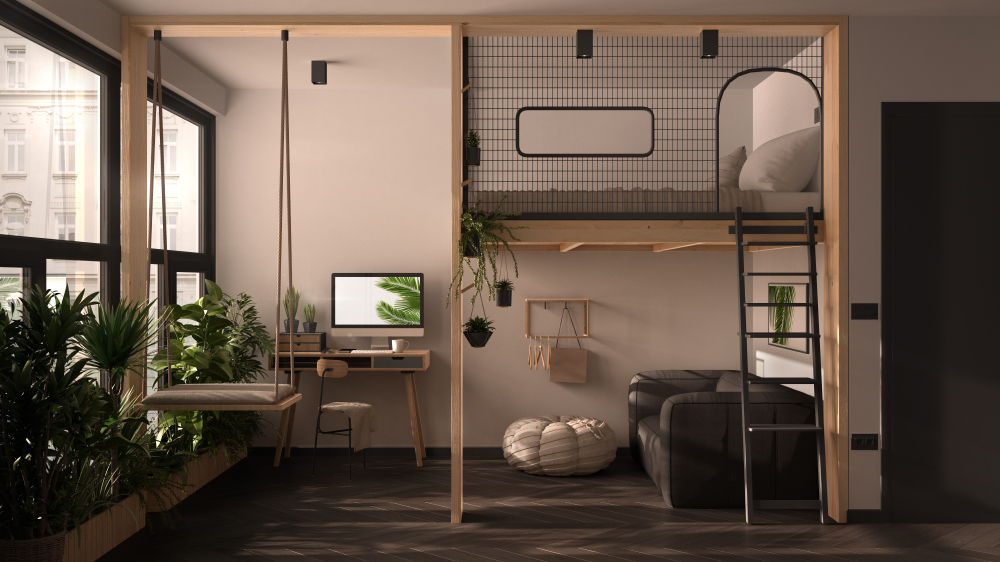
Loft beds like this one give you double the space, allowing you to have a desk when you may not otherwise have room. You could also create a cozy setup like this!

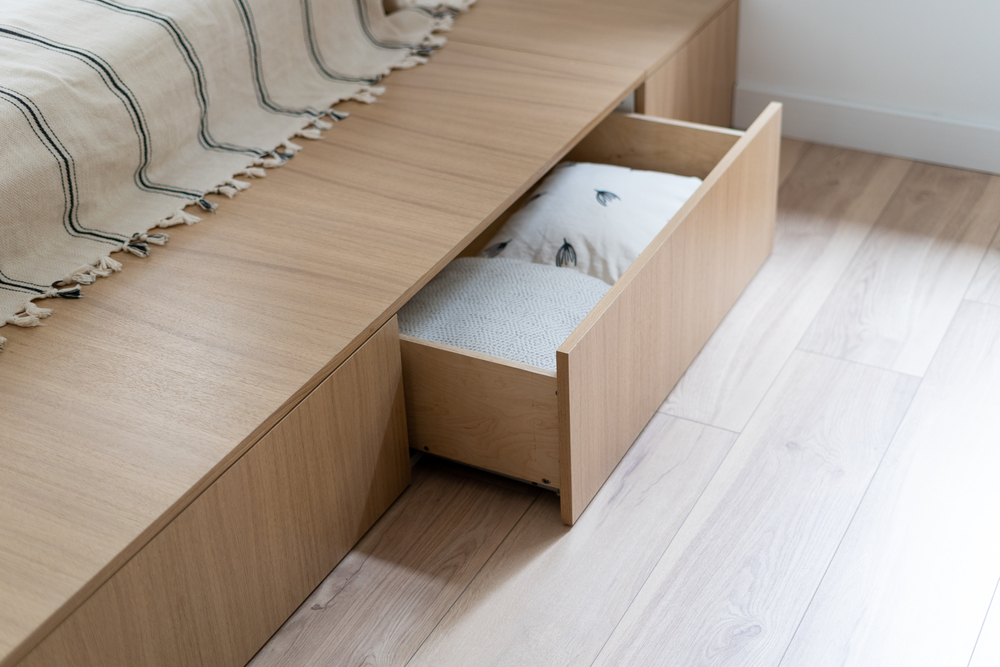
If you have a larger bed, maximize your space using under-bed storage. Find a bed with drawers in the base or just use baskets (they serve the same purpose).

Benches are often underutilized pieces of furniture, but they shouldn’t be! They’re incredibly versatile and can go almost anywhere in your home. Have an unused wall or corner? Scour flea markets to find a bench. If it doesn’t have built-in storage, simply add a few baskets underneath for shoes, blankets, or other items.

This entryway setup creates a natural place for shoes and offers a place to sit while putting them on. Bonus: it’s small and would fit anywhere.

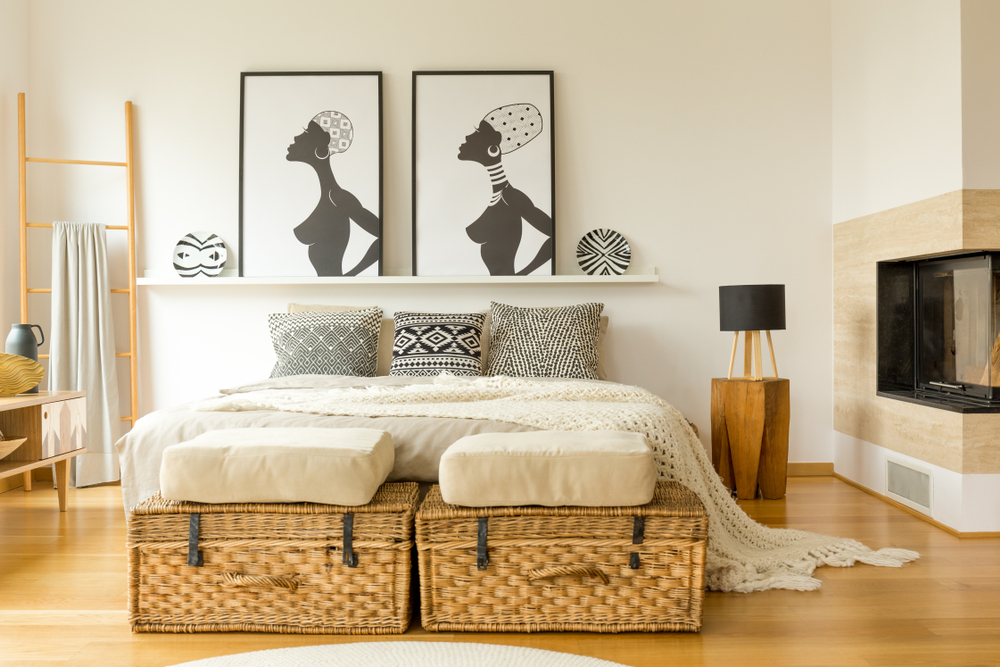
These wicker baskets act like an end-of-the-bed bench while also providing storage where you can tuck away extra pillows and blankets.

2. Choose Lighting that Creates Space

When you’re looking for other ways to make your home more versatile, upgrading your lighting is another quick and practical option. Changing up your lighting can save you space and make your room feel bigger. If you choose quality fixtures that last longer and use less energy, you’ll end up saving money in the long run, too.

Task lighting is essential in an office space. Ditch that desk lamp that’s taking valuable real estate on your work surface and find a flexible floor lamp that can be used as ambient lighting or as a reading lamp when you’re off the clock.

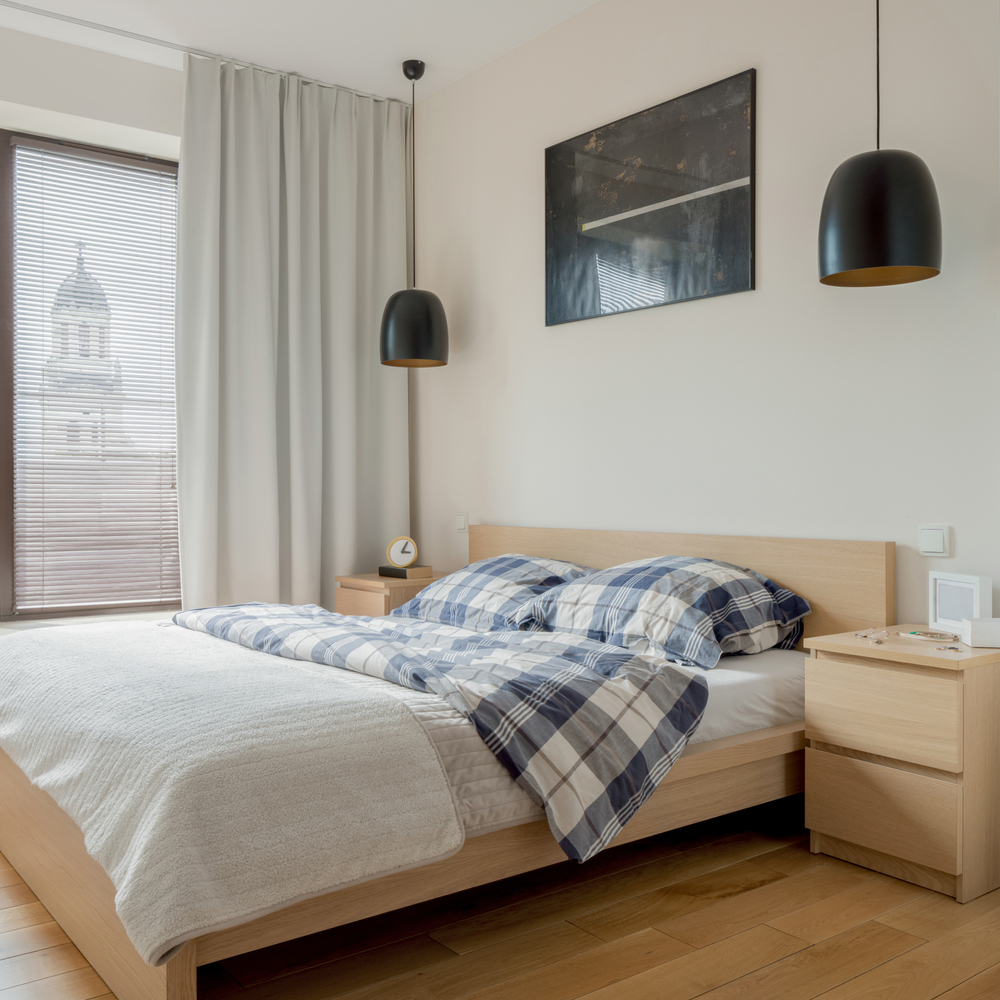
Instead of using a table lamp on your nightstand, consider hanging pendant lights above it instead! Visually, it creates space around your bed, making it look more open and airy. Plus, you’ll have more room for that stack of books you’re working on.

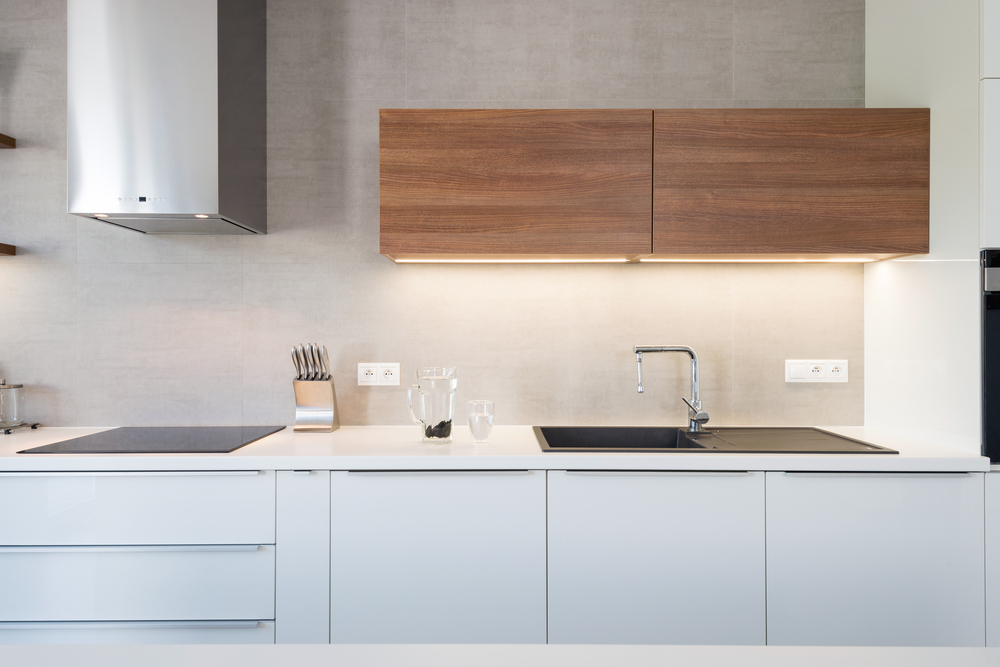
Small kitchen woes are no more with under-cabinet lighting. LED light strips are easy to stick on, and they’ll make your kitchen feel bigger and brighter. They also make your counter space more functional – nobody should be using a kitchen knife in the dark! 

Pro tip: Mirrors make your space look bigger! Place one near a window or a light fixture to reflect the light to create the illusion of a larger space.

3. Get Creative

Arguably the most important way to save space is to get creative! There are so many ways to use your space better, and there are lots of places to find inspiration. Look for wasted space in your home, and find design solutions that are versatile and solve multiple problems.

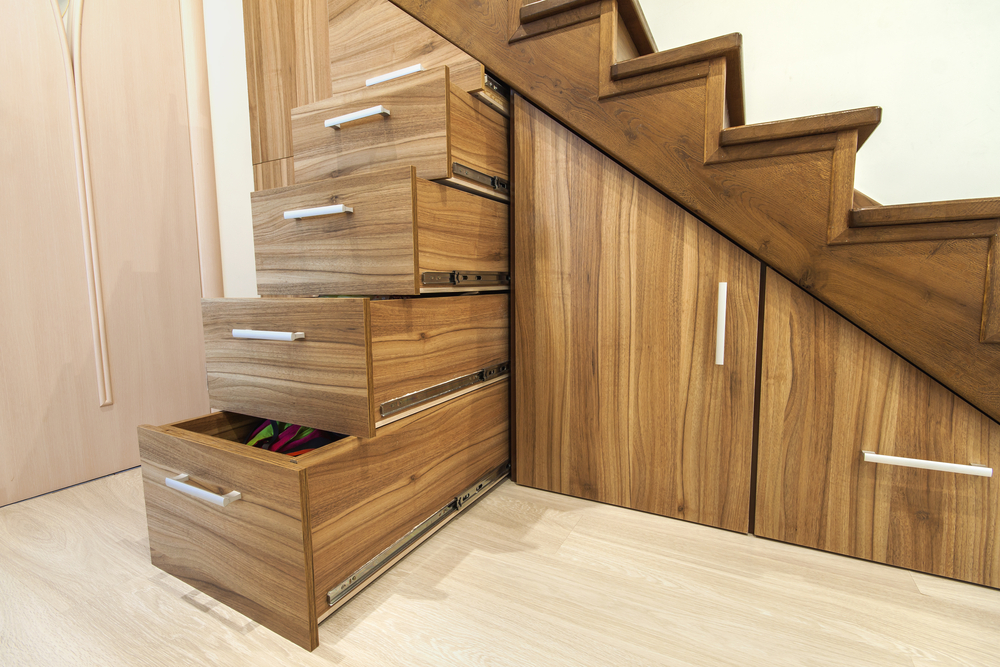
A common place to find wasted space is underneath the stairs. Getting it opened up and organized is a great way to get more bang for your buck. Drawers like these make use of every single square inch under the stairs! 

If drawers aren’t an option, find shallow shelving or hang hooks on the wall to create a space where you can throw all of those holiday decorations you only see for a month at a time. 

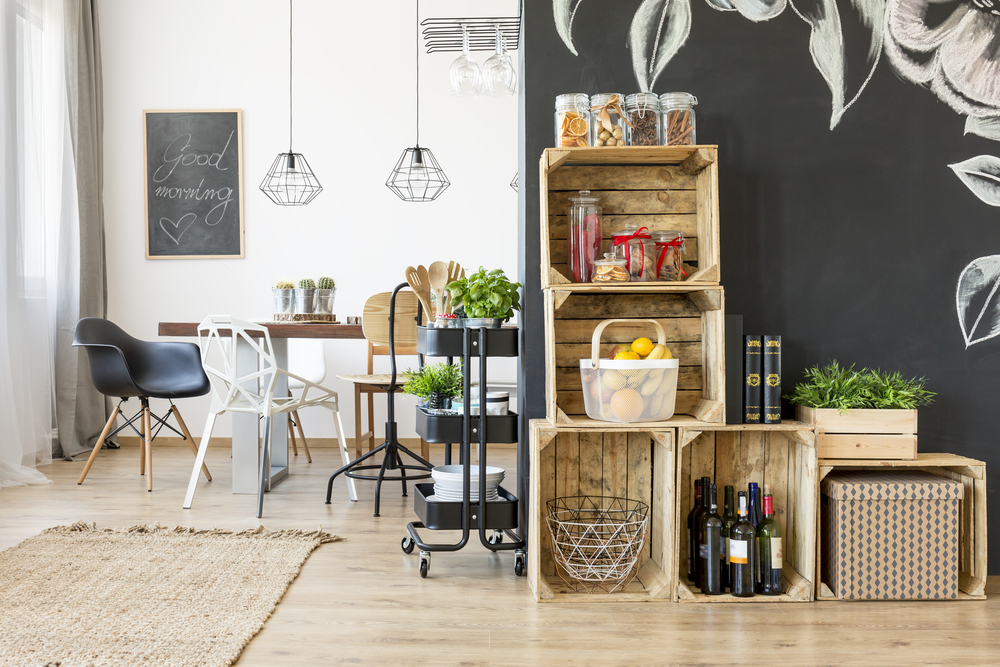
If your kitchen space is small and you’re short on storage options, put your empty corners and walls to work. This 3-tiered cart does double duty as a plant stand and extra kitchen storage. The wooden crates also double up – serving as both a decorative element and open shelving for larger kitchen items that would otherwise take up valuable cupboard space.

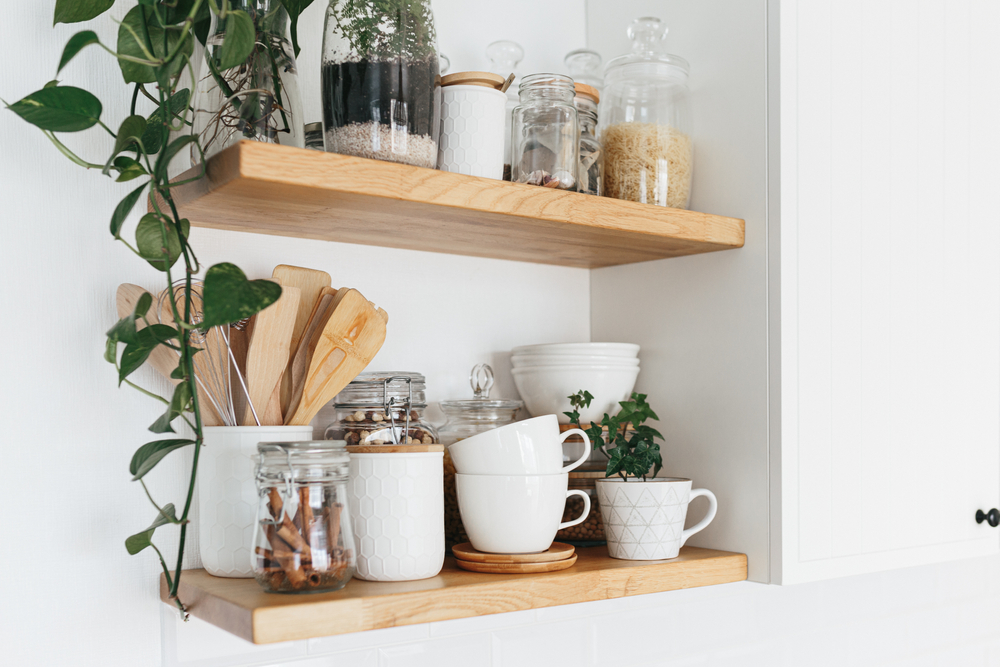
Another way to add visual interest while creating storage is hanging up floating shelves. Open shelves like these are a great place to put your favorite kitchen-wares on display where they can be easily found when it’s time for a mid-afternoon coffee break. 

Open shelving also works great in the bathroom. Use them to store bulky bath towels, or buy decorative baskets to hide away all of that countertop clutter when you’re not getting ready for the day.

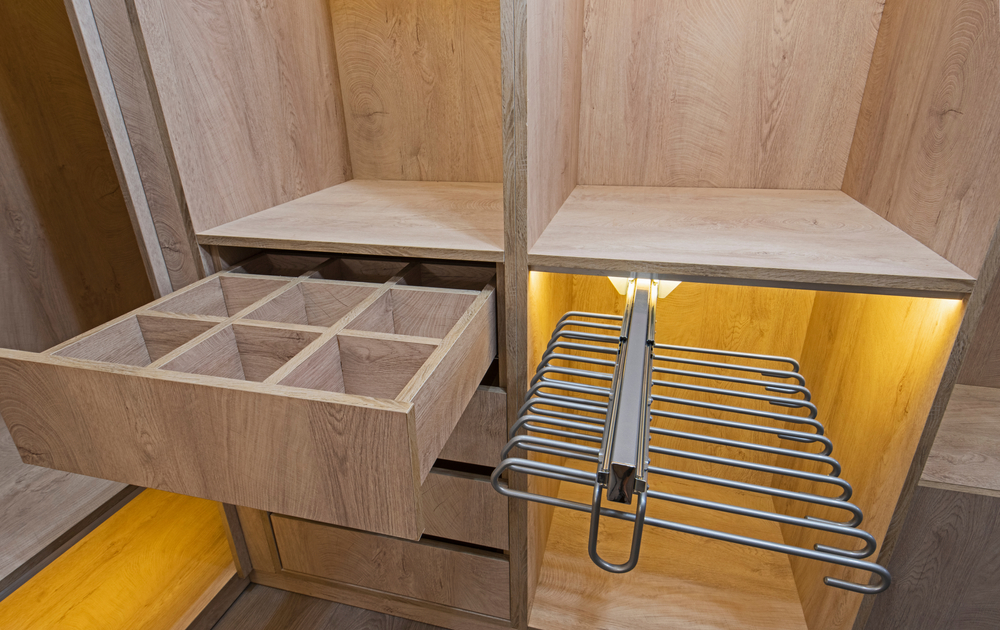
Closet busting at the seams? Make your closet space work for you with organizing systems that save space, like these drawers and slide-out racks. 

Maximizing Your Space

This tiny home is a perfect example of these tips in action. The multi-use kitchen set can be folded away and used for extra guest seating. Natural light and interior lights combine to keep shadows at bay, making a small footprint feel open and airy. Creative storage options are tucked into every square inch. 

You don’t have to be making the most of a tiny apartment to take advantage of space-saving and space-creating design tips. Just remember – when you’re trying to maximize your space, everything you have counts. Make sure everything you have is intentional and serves at least one purpose – hopefully more!

To learn more about creative lighting solutions that will help you maximize your space, stop by Western Chandelier’s showroom! We’d love to chat and help you find what you need to get started.

Filed Under: 2022, How to, Life & Style, Tips and Tricks

How Light Bulbs Made the Industrial Revolution Possible

How Light Bulbs Made the Industrial Revolution Possible

by admin · Apr 26, 2023

The Industrial Revolution was marked by invention, early machinery, and mass production. Likewise, modern methods of supplying fuel, preserving food, producing clothes, and providing health care began with the Industrial Revolution. And a crucial common factor across the modernization of these industries? 

Light bulbs.

Let’s set the stage. As the global population increased in the 1800s, a vicious cycle emerged. With more food, medicine, and shelter available, more children survived to adulthood. More adults meant more families with children, creating greater demand again. So over and over, more people were born and lived longer than before and increased demands on the global economy.

As early supply chains attempted to provide basics to the growing population, its success led to more people surviving.

The Industrial Revolution characterizes an era of inventors, undoubtedly fueled to relieve suffering and improve old methods. In short, it was an attempt to tame this cycle by providing more goods faster, easier, and in better conditions.

But the trouble was, demands for goods often rose faster than was safe to produce them. As a result, many industries struggled to find ways to increase production, but the light of a candle could only go so far into the night, and it came with dangerous risks and consequences.

Coal Miners: The Backbone of the Industrial Revolution

Let’s start with some of the most heavily relied-upon characters of the Industrial Revolution– coal miners. As demands for residential heat grew, so did the need for fuel for factories and trains.

Coal miners dug deep underground to supply the world with the required fuel. It was dangerous work, not only because of the use of explosives underground but because it was so dark. Lack of proper light made accidents common and kept production slow.

Candlelight was the only source of artificial light then. This posed a problem because mines often release flammable gases. The slightest fire exposure in the tunnels regularly resulted in explosions with hundreds dead. Inventors tried– but were unsuccessful– to create proper fire shields. As the need for coal grew, so did the number of fire-related incidents and deaths in the coal mines.

Reducing Fire Risk in Textile Factories

Another significant mark of the Industrial Revolution was the beginning of mass-produced clothing. Before factories existed, most clothing was tailor-made for each family member. Wealthy families hired sewists, and low-income families made their own clothing.

Textile factories promised to speed clothing production and free up time for other work. But unfortunately, textile factory workers faced a similar problem to that of the coal miners. 

Before making clothing, cotton had to be spun into thread, then woven into fabric. This fabric would then be cut into patterns and sewn into finished clothing. The system of processing cotton led to very dusty rooms filled with tiny floating pieces of raw cotton. Even the smallest flame could catch the floating cotton, creating a runaway fire in moments. These fires took down entire factories in moments, often with few survivors.

Unlike the miners, textile workers could use the light of day through windows. But there was little sunlight in rainy regions or during the winters. So textile production had to slow or risk the use of candlelight according to the weather or season.

Here again, the invention of the electric light bulb allowed for safer work and better conditions for these workers. Electric light reduced the strain on workers and evened out available work hours. The growing population could now count on having enough clothing.

Impact on Food Preservation

The United States population exploded between the 1800s and 1900s as territory expanded. Consequently, the demand for food increased with these settlements and cities.

People’s access to food in the early 1900s was determined mainly by what they could grow themselves. You would eat some of the fresh food you could grow during the summer and store the rest to survive the cold winters. As a result, starvation was a constant threat, and malnutrition was common.

During the Industrial Revolution, many factories opened and started to mass-produce canned food. While canning factories did not risk the same dangerous fire as miners and textile workers, they still had limited light.

Enabling Quality Healthcare

Finally, light bulbs improved the quality of healthcare in hospitals around the globe. The 1800s showed a marked increase in understanding human anatomy and how to save a person’s life after a severe injury.

However, medical attention requires detailed work, and poor sanitation and techniques cost thousands if not hundreds of thousands of lives. Even the simple fact that candles and firelight distort color made it difficult for early medical professionals to accurately gauge a patient’s health status. 

Beyond surgeries, hospital care, or home visits, the development of new medicines was also limited before the Industrial Revolution. For example, penicillin was developed in the 1920s – 1940s and is widely regarded as the first true antibiotic. The drug was developed through the work of many scientists observing bacteria cultures in universities, and it saved countless lives during World War II alone.

Although light bulbs alone did not allow for the creation of penicillin, the availability of consistent light (partnered with microscopes and other technology) is clearly linked with a massive spike in new medication since the early 1900s. 

Lightbulbs: The Unsung Hero of an Industrialized World

We owe our modern, comfortable world to many inventions of the late 1800s and early 1900s. Still, there is no doubt that none of them would have been as successful without the invention of the electric light bulb. And so, the ordinary light bulb is the unsung hero of the modernization of the world.

So, the invention of the electric light bulb created the possibility of an industrialized, modern world– a world where people had enough heat, food, and medicine. The light bulb allowed for safer working conditions and paved the way for other inventions that advanced humanity as a whole.

Electric light provided bright, steady light for miners without a significant risk of explosion. As a result, artificial light significantly reduced the number of deaths. As a bonus, it also allowed them to work faster. Thus, miners could better fuel the world, unleashing the Industrial Revolution.

Food production through factories was unleashed with electric lights. The world now had an efficient and cheap process to provide food that could last months or years on the shelf.

As one could imagine, electric light significantly improved healthcare quality. Surgeries were performed with much better lighting, and follow-up care received better attention. Doctors and nurses could discover infections faster and perform precision work with accuracy.

Aside from hospital care, proper lighting enabled the creation of new medicines and techniques. Electric lighting was not the only factor to decrease medical-related deaths. Still, the widespread availability of steady light enabled doctors and scientists to make significant strides in proper care.

—————

At Western Chandelier, we are proudly following in the footsteps of these early lighting engineers. We are just as passionate about lighting the world as they were as we supply homes and businesses with the latest designs and functionality. Talk with an expert at Western Chandelier today to get custom advice on your lighting needs.

Filed Under: 2022

A Guide to the Basic Types of Light and How to Use Them In Your Home

A Guide to the Basic Types of Light and How to Use Them In Your Home

by admin · Apr 19, 2023

Light is all around us, controls what we do and how our body runs. Yet, most people haven’t given much thought to the kinds of light that surround them. In this article, we’ll cover the basics of both as we explain how to use light to your advantage.

Types of Light in Interior Design

When we talk about interior design, there are a lot of different words that get tossed around about lighting. It can get a little confusing, but the good news is, if you can get down these main types of light you’ll be 90% good to go! 

  • General/Ambient: This is the main source of light for a space. It fills the room with bright, balanced, even light. This usually comes from an overhead fixture centered in the room or an array of recessed lights.
  • Task: Task lighting is usually bright and used in combination with ambient light. It’s extra light that is strategically placed to add focused light to a workspace, like a kitchen counter or writing desk.
  • Accent: Accent light refers to light that is more about design than function. Spotlights, track lights, and strip LEDs can fall into this category. They often shine on artwork or architectural features like high ceilings or feature fireplaces. Although accent light does fill a function, the main value is decorative.
  • Mood: Mood lighting is generally soft, dim light. It encourages a calm or romantic atmosphere. Most often this is done with lamps, candles, or lights on dimmer switches.

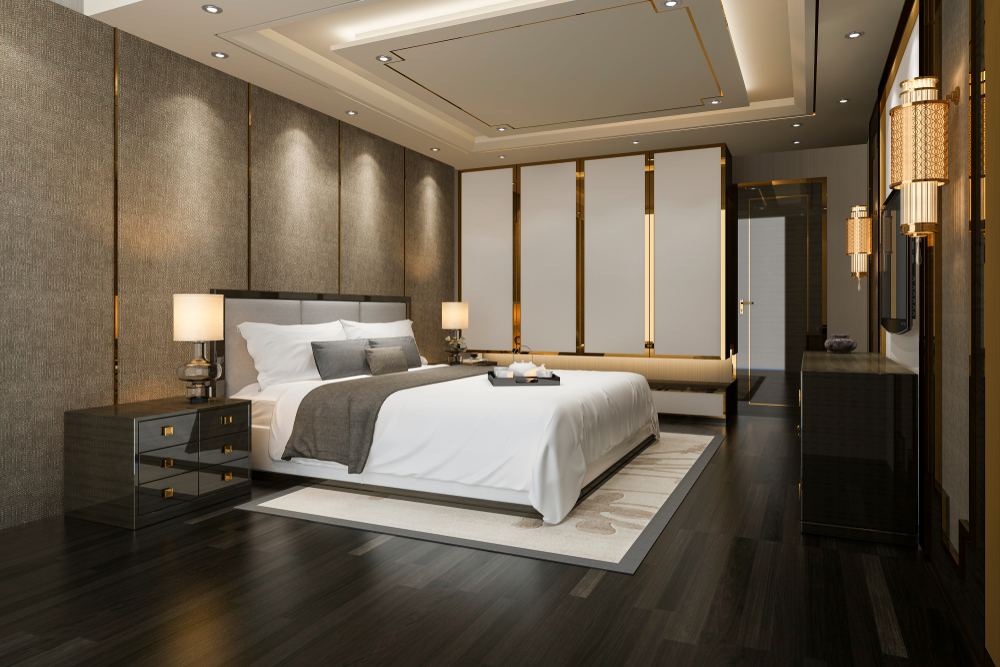
When designing a lighting plan for your home, it’s important to create “layers” of light by including several types of lighting in each space. To see this in action, here’s a breakdown of the types of light found in this bedroom:

  • General/Ambient: Array of recessed lights along the ceiling
  • Task: Reading lamps on either side of the bed
  • Accent: LED light strip tucked around the edges of a coved ceiling, recessed lights shining on wall panel details, decorative sconces on wall centered around the dresser
  • Mood: Soft lights under closet doors, dimmer switches on several fixtures

This room is a great example of the way layered light adds to the design of a space without being overwhelming. Remember, you won’t usually be using all of these lights at the same time – but having options lets you customize the space for, however, you need to use it at the moment.

Other Types of Light

For most of your home projects, understanding the main types of lighting should be sufficient, but there are a few other lighting terms you may hear. Here are a few of the most popular terms: 

Diffused Light

Properties: Gentle, encourages relaxation

Best locations: Bedrooms, tub, Living Room, Dining Room

Diffused light is a natural companion to warm light. This term refers to light that is scattered and doesn’t cast a hard shadow. You can create this effect through reflected or covered lighting. We’ll focus on the latter here and touch more on reflected light in the next section.
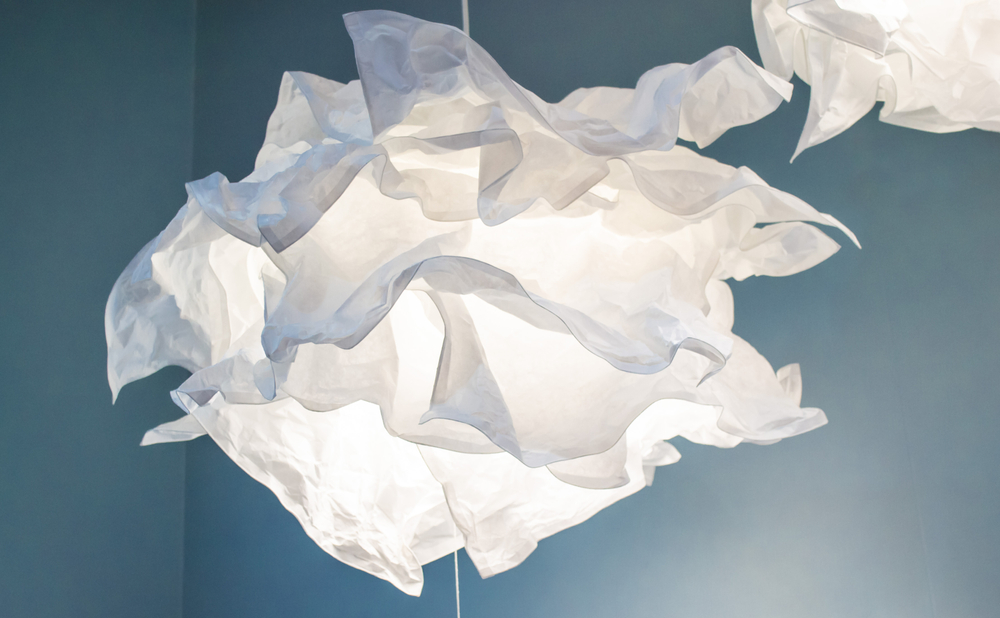
Breaking up light makes it less harsh and more relaxed, cozy. Popular design elements are boho wicker chandeliers, modern plastic-covered lights, or paper lanterns. Both allow for plenty of light but filter the harshness of the bulb.

The opposite of diffused light is hard light. This light shines directly from the source and casts a hard shadow. This light is often found in workspaces like the kitchen or office. 

Reflected Light

Properties: Gentle, amplifies space

Best locations: Kitchen, Living Rooms, Bedrooms

This term has more to do with how light reacts in a design after it hits a surface in your home than with the source of the light. There are a few things that will affect how the light hits, and bounces off, the objects in your home. 

Color

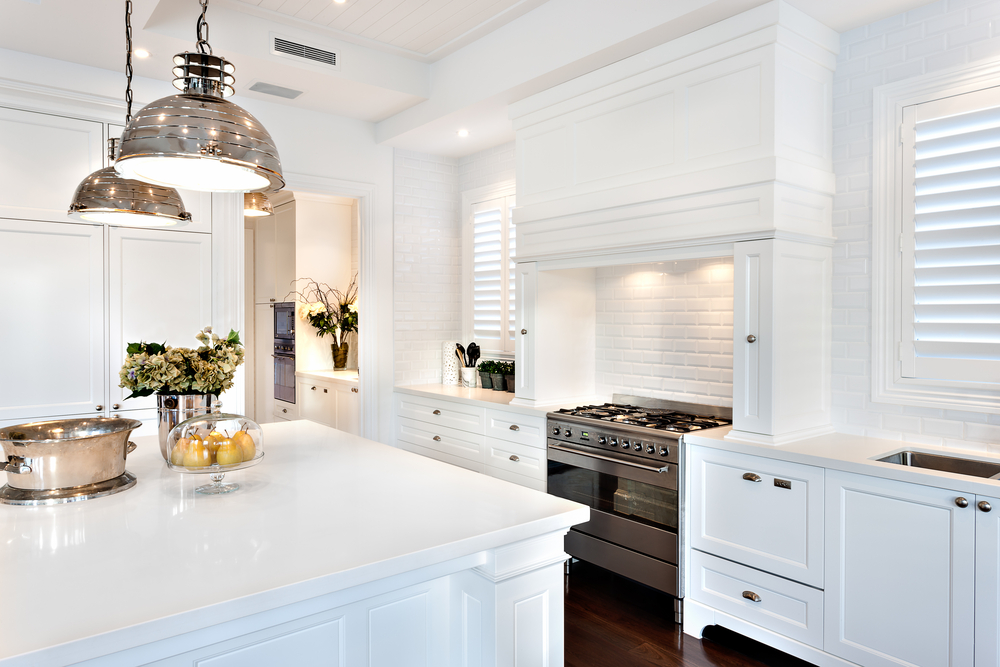
Light colors reflect light, and dark colors absorb light. You can make a room feel big and spacious with just a coat of light-colored paint on the walls and ceiling. If you go dark on your walls, you’ll often need to add additional light sources to keep your room from feeling small.

Finish

Smooth, glossy finishes like wood floors or metallic furniture will reflect light and bounce it back out into the room. Interiors with lots of glossy surfaces can get away with fewer light sources. If your room feels a little too bright – try adding in some softer, textured surfaces like a fabric sofa, a rug, pillows and blankets, or textured wall art. 

Backlight

Properties: Highlights design, provides contrast, decreases eye strain

Best locations: Closets, Bookshelves, Cove ceilings, Wall panels, Kitchen cabinets, TVs and Computer Screens

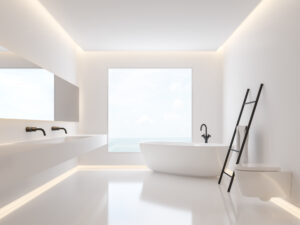
Backlighting is the practice of lighting an object from behind. With a soft light source behind it, your bed, tv, art, or mirror will look like it’s glowing. In interior design, backlighting can also refer to the practice of lighting a wall, floor, or other surfaces with soft light (as seen above) to give the illusion of continuous, shadow-free illumination. 

As A Design Element

The key to successful backlighting is to tuck the light sources out of view and in reflective areas. In interior design, backlighting is usually found tucked into the recesses of architectural details like cove ceilings or wall panels, or around cabinets, bookshelves, and closets.

Behind Screens

Another common use for backlighting has a little less to do with design and more to do with function. Running a strip of LED lights along the back of a TV screen or computer monitor creates a soft glow around the edges of the screen, which reduces the strain on your eyes. Light used in this context is also often called bias lighting.
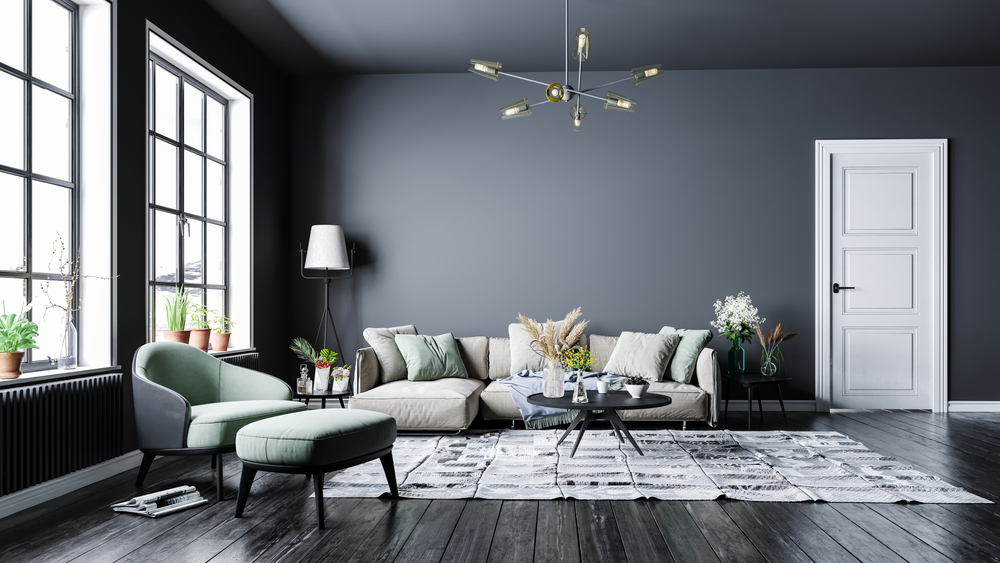
Light Temperature

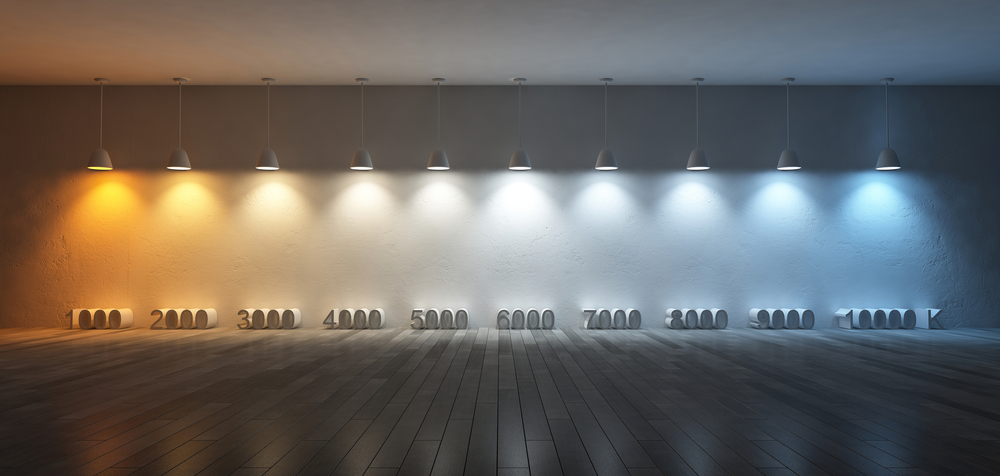
The temperature of light refers to its energy and wavelength. Higher energy light can appear blue and is called cool. Lower energy light appears yellow or red and is called warm. The temperature of the bulbs you put in your light fixtures can actually impact how you feel while you’re in the space, and can even affect your sleeping patterns.  

Traditional incandescent bulbs only gave off warm light, so there was little variety in the light temperature of interior light fixtures. But LED technology has created light bulbs that can give off any wavelength from cool to warm, and some bulbs can change color with the click of a button on a remote. 

Homeowners now have a much wider range of color temperatures to choose from – so it’s important to understand how these light temperatures affect you when you’re lighting your home.

Cool Light

Properties: Alertness, attention, working brain

Best Locations: Office, Kitchen, Vanity, Bathroom Mirror

Blue light is receiving a lot of negative attention these days, but it’s not all bad. Blue light is a very important part of both our daily cycle and our workday.

The biggest source of blue light is the sun. The blue spectrum of light activates our attentive brain, which helps to keep us alert.

Since blue light is excellent for concentration, it is perfect for work areas. The kitchen, home offices, homework areas, and around mirrors are perfect locations. It’s often used for general lighting and task lighting. Cool lights allow the whole family to focus up and get great work done. 

Because cool light keeps your brain alert, it’s best to turn off all blue light sources 2 hours before bed. That includes your phone screens and TVs – if you’re not getting great sleep at night, try changing your relationship with blue light. It can make a big difference! 

Warm Light

Properties: Relaxation, sleep, resting brain

Best Locations: Bedrooms, Living Room, Dining Room, Bathtub

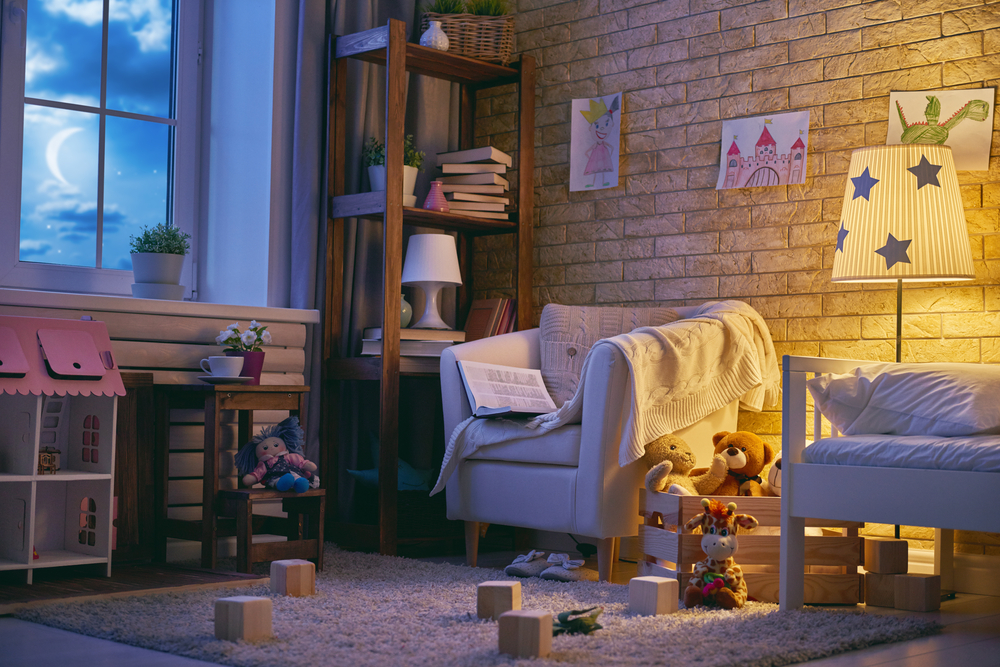
This light has a longer wavelength, travels more slowly, and outputs less energy.  Warm light signals our brains to relax and encourages rest and sleep. 

Fire, such as from a candle or fireplace, is a natural source of red light. Sitting around a fire at night to feel cozy or romantic isn’t an arbitrary human idea – it’s biology!

Warm light sources are perfect for bedrooms, tub areas, living rooms, or dining areas. Ending your day in warm light will help your body to relax and get ready for excellent, restorative sleep.

Natural/Neutral Light

Properties: In between warm and cool light, bright but not harsh

Best locations: Substitute for cool light for sensitive eyes

There is a third bulb temperature marketed today. Natural or neutral bulbs give off light in between cool and warm. These bulbs may be particularly useful for those with light sensitivity problems. These bulbs are bright enough to fill ambient lighting needs to work in without feeling harsh. 

Ask the Pros

It can feel intimidating to design the light of your home. The lighting pros at LitLiving are available to help you combine your aesthetic, room needs, and budget as they connect you with the best lighting showrooms around.


Filed Under: 2022, Informational

Eco-Friendly Interior Design: 5 Tips For a Sustainable and Stylish Home

Eco-Friendly Interior Design: 5 Tips For a Sustainable and Stylish Home

by admin · Apr 12, 2023

There are many advantages to making your space more eco-friendly. By reducing your home’s carbon footprint, you can save money and even improve your home’s air quality. The trick is doing it without compromising on style. If you’re struggling to find sustainable yet stylish swaps for your space, look no further! Below we have rounded up some of our favorite eco-friendly interior design ideas.  

1. Bring The Outside In 

Indoor plants make for great decor – they are lush and give your space dimension, texture, and color. House plants can also be powerful air purifiers and help reduce the levels of CO2 in your home. If you’re already a plant parent, you may want to consider an indoor vegetable or herb patch. These small but mighty gardens look great on any window sill, plus you can eat their produce! A dedicated LED grow light will ensure you can harvest your indoor garden all year round.

2. Opt For Natural Fibers 

Whether you’re in the market for a new rug, light fixture, or pouf, look for items made from natural fibers such as jute. Jute is a material made from the jute tree, which is a fast grower and needs very little water to survive. Jute is also bio-degradable and recyclable – making it super eco-friendly!  When it comes to upholstery, opt for bamboo fabrics. Latex is another solid option as it comes from the rubber plant. 

3. Pick Low or Zero VOC Paints 

One of the most important decorating decisions you will likely make is the color of your walls. Your color palette will determine the mood of your space and set the tone of your home style. The problem with paint is that many contain harmful VOCs – or volatile organic compounds. The best eco-friendly interior design paints are labeled “low VOC” or “zero VOC.” These paints are water-based, are lower in odor, and are a more eco-friendly option.
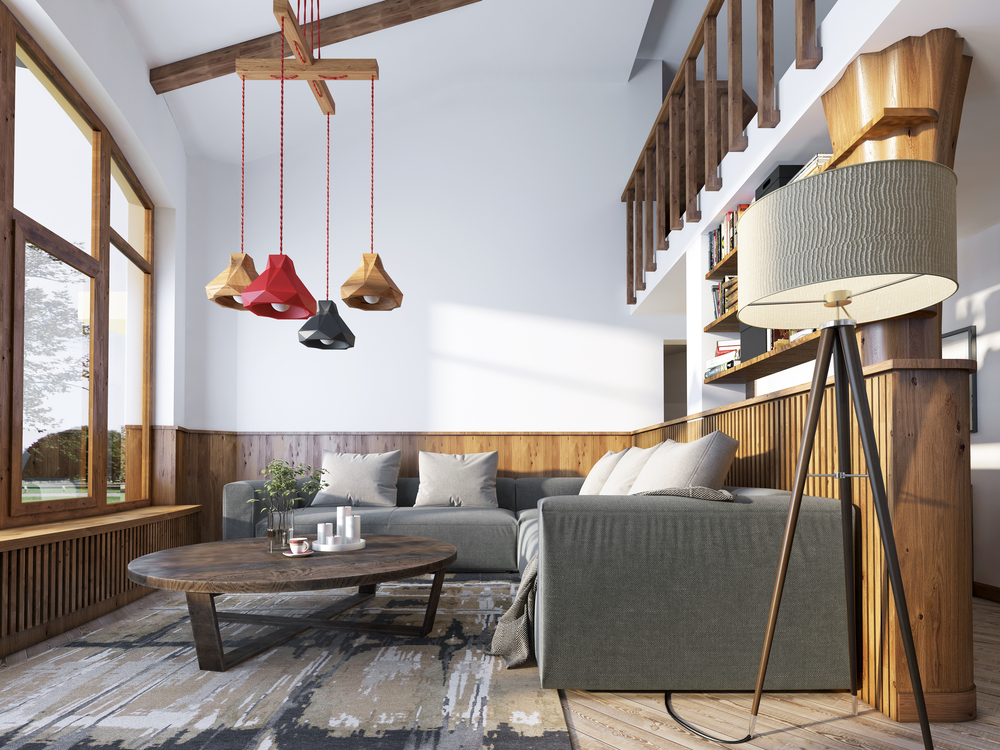
4. Swap Your Bulbs 

Every good interior designer knows that a room’s lighting will make or break the space. To make your existing lighting more eco-friendly, opt for high-quality LED bulbs. They consume less energy than regular bulbs, and they last much longer. This means fewer bulbs are being manufactured and ending up in landfills – and your utility bills will be lower.  

5. Dim Your Lights

Dimmers are excellent for many reasons, and they can totally transform your space. With just your fingertips, you can go from bright and fresh to warm and moody. Dimmed lights also use less energy than regular lights, which is good for the planet and your wallet. Interior designers also love dimmers for the plate switches. They are sleek and sophisticated and are sure to elevate any room. 

To find out more about sustainable lighting options, give us a call or stop by our showroom. Our lighting experts can help you find exactly what you need to go green.

Filed Under: 2022, Energy Efficient Lighting, Life & Style

17 Beautiful Chandeliers to Suit Any Aesthetic

17 Beautiful Chandeliers to Suit Any Aesthetic

by admin · Apr 5, 2023

Chandeliers are divas – they have to be the center of attention in any room they’re in. They are as versatile as they are dramatic – they come in all shapes and sizes and can be added to any design aesthetic. The right chandelier can make a room feel luxurious, moody, bright, rustic, modern, or anything in between. 

Because they make such a big statement, picking a chandelier that complements your decorations and personal style can be tricky at best. That’s why we’re here! These 17 interiors are from all over the interior design spectrum – but they are all feature gorgeous chandeliers that scream beauty, grace, and SEE ME IN MY SPACE! Enjoy.

1. Clean Farmhouse

This dark iron chandelier stands in stark contrast with the bright whites in the room and flawlessly ties the darker elements together. Its clean lines complement and balance the space perfectly.

2. Eclectic Haven

With other competing colors and patterns, this two-tiered chandelier is a much-needed focal point in this eclectic space.

3. Modern Home

In this room, soft round shapes are the star. This unique chandelier highlights the circles in the room, complementing the style.

4. Bohemian Paradise*

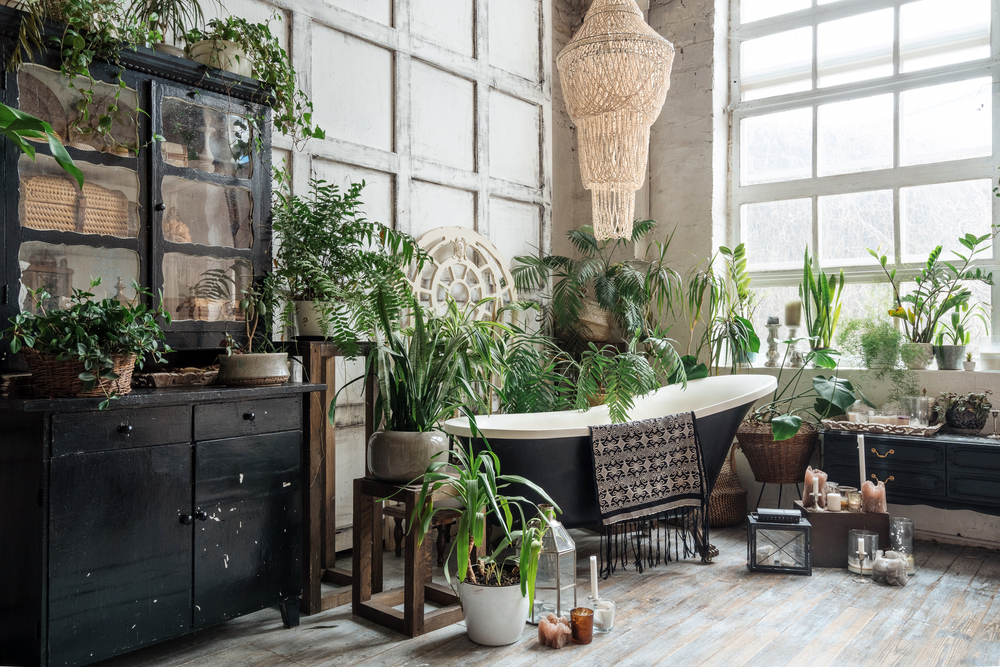
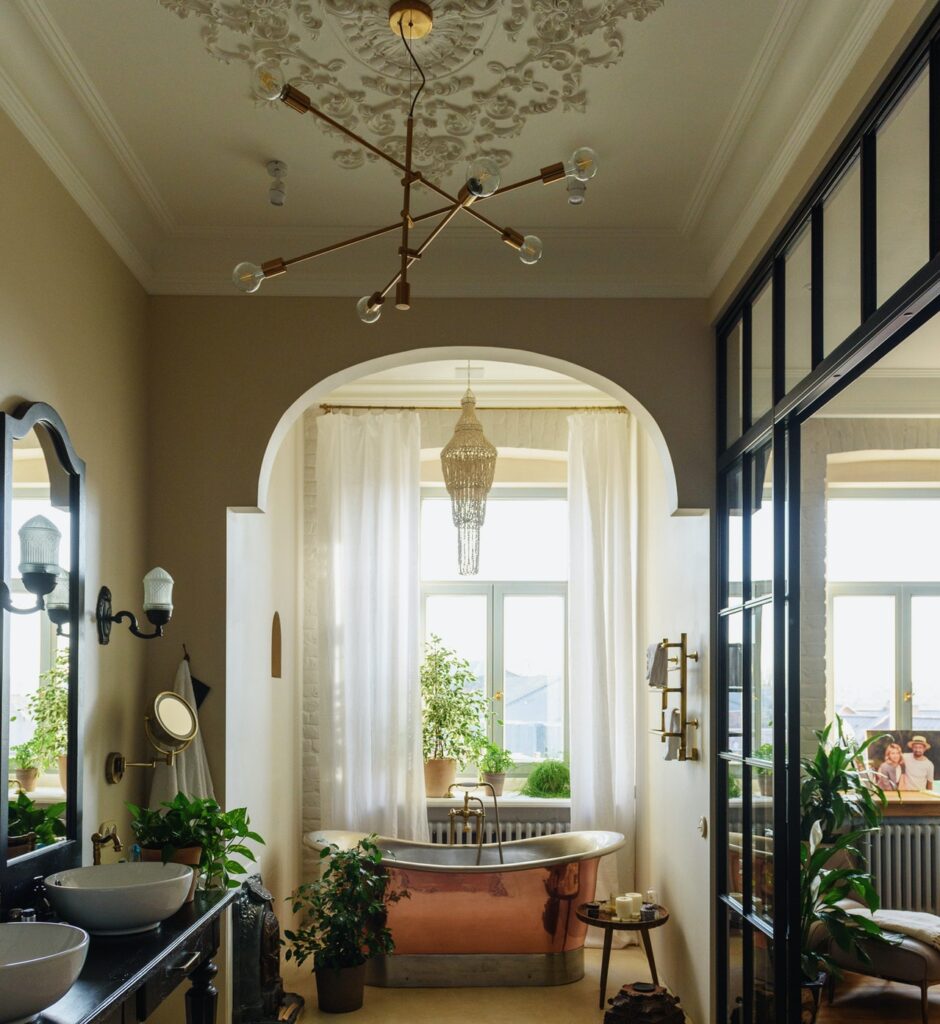
The macrame chandelier nestled above this claw-foot tub creates an unexpected and very relaxing environment to kick your feet up in.

5. Mid-Century Boho

This seating area’s chandelier ties in the boho elements of the room, while still staying true to the space’s mid-century origins.

6. Classic Elegance

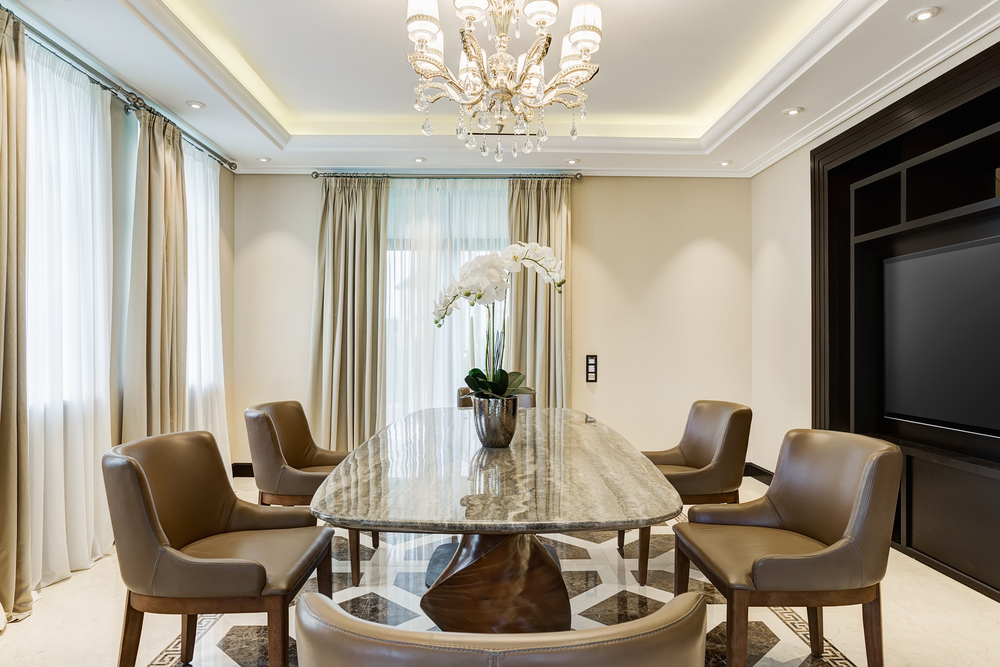
The vintage elegance of this crystal chandelier gives this neutral dining room a perfect classic-modern balance. 

7. Rustic Beach Bedroom

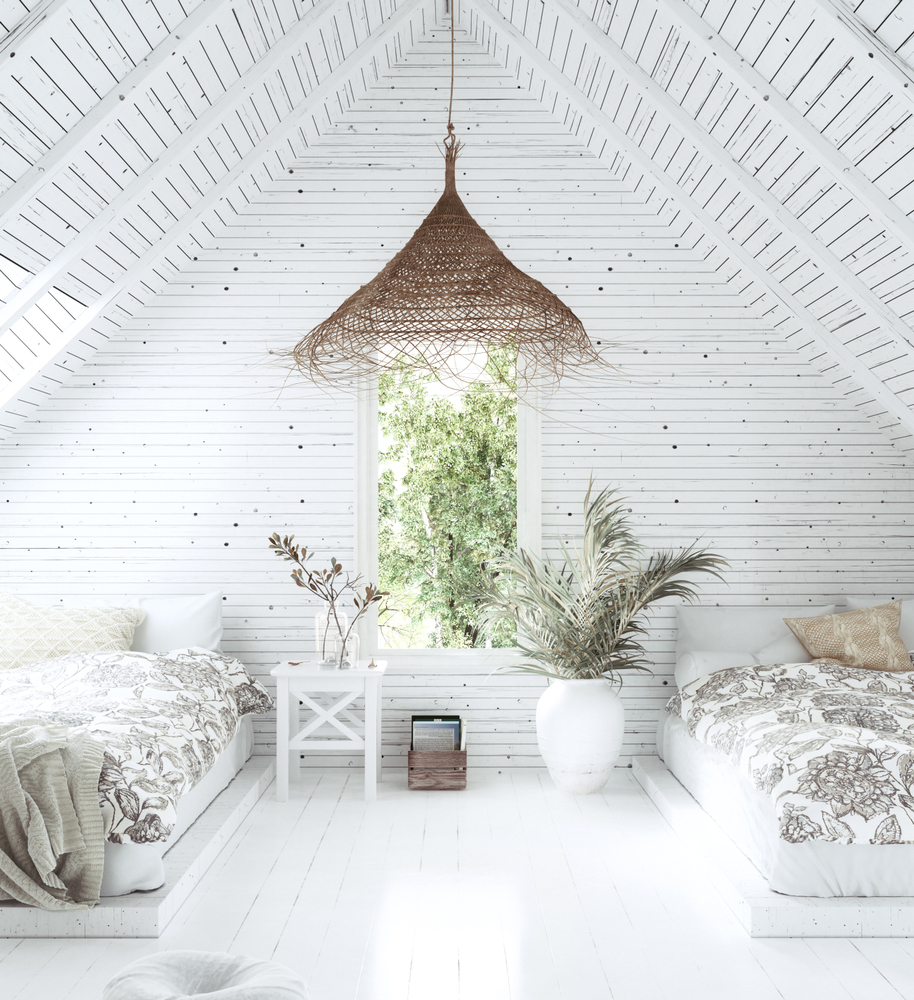
The chandelier in this bedroom transforms the room from rustic to modern beach house with just a flick of a light switch (and, most likely, some professional installers). The brown against the distressed shiplap walls and ceiling stands out while still complementing the rustic style.

8. Vintage Breakfast Nook

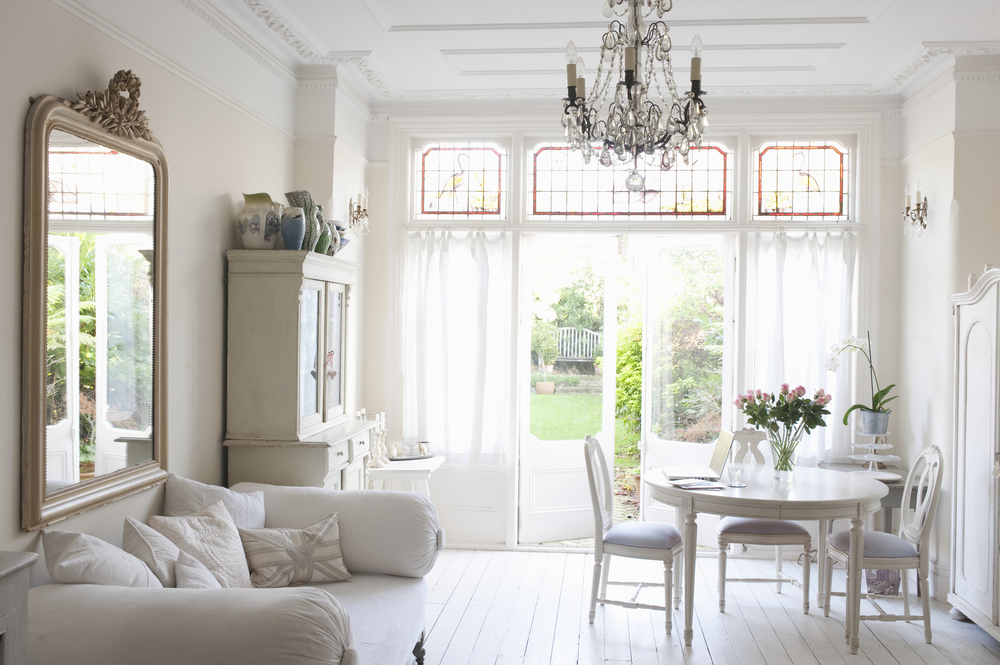
Vintage crystal chandeliers like the one in this breakfast nook are timeless. In this light and airy space, the crystals reflect light, while the darker elements provide a much-needed focal point.

9. Colorful Mid-Century

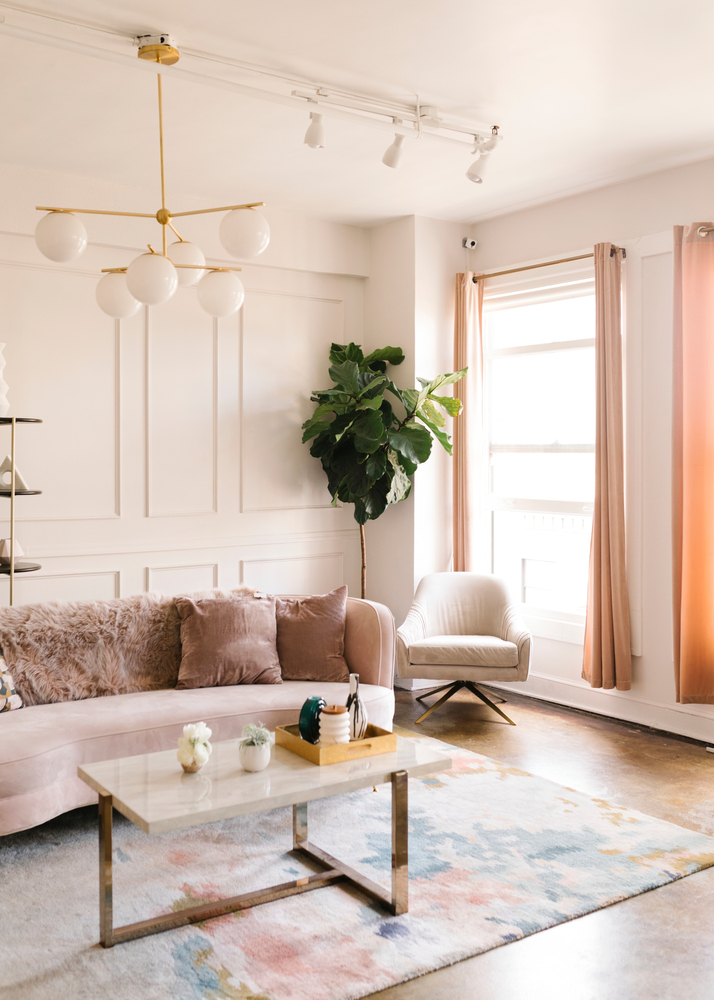
The trendy pinks and golds of this room tie in perfectly with this modern gold globe chandelier. The light fixture adds warmth and levels up this living room.

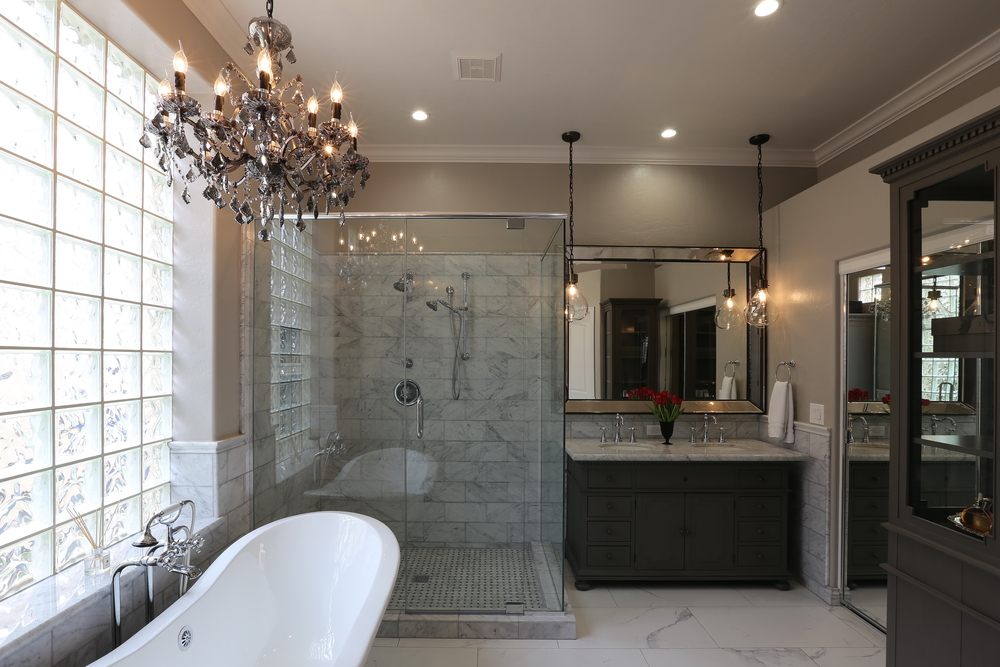
10. Elegant Bathroom*

There’s no better way to bathe than in a bathroom that exudes modern comfort. The shape of this crystal and iron chandelier is classic, and its finish matches the black hardware on the cabinets—a perfect tie-in for this space.

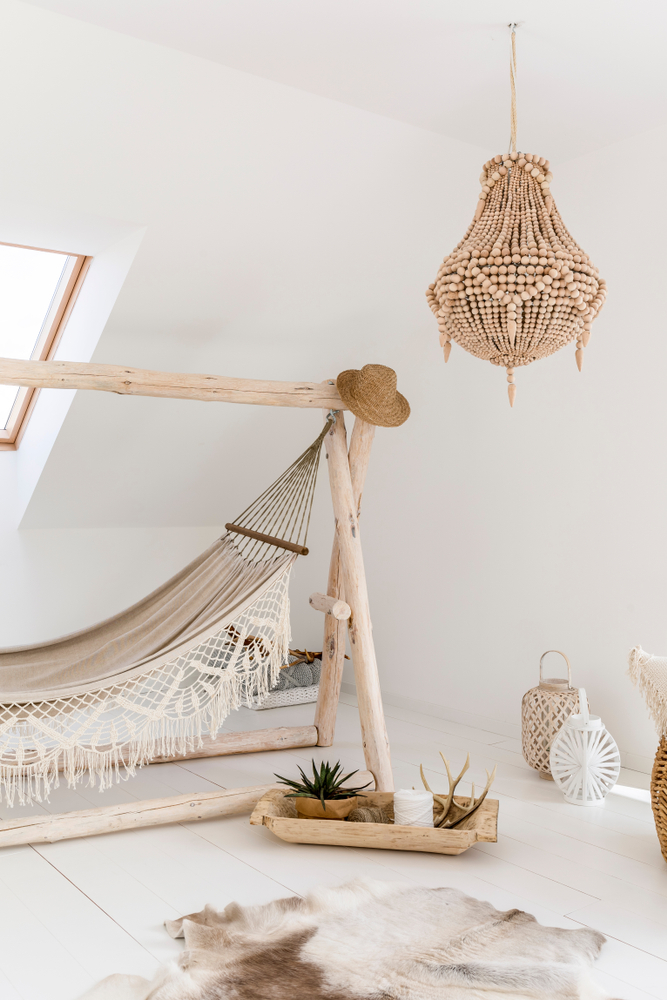
11. Boho Loft

Even though the color on this chandelier is neutral, it’s still the highlight of this loft. The thought of laying in the hammock with the wooden beads above you just screams comfort (in the most chill way possible). Grab a good book and snuggle up with a blanket for ultimate relaxation.
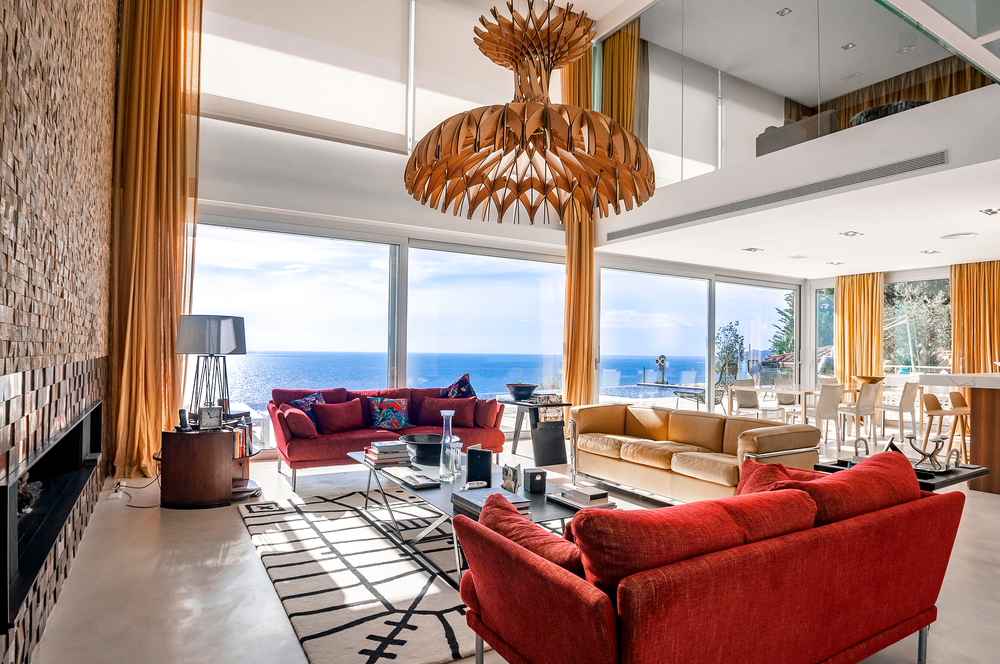
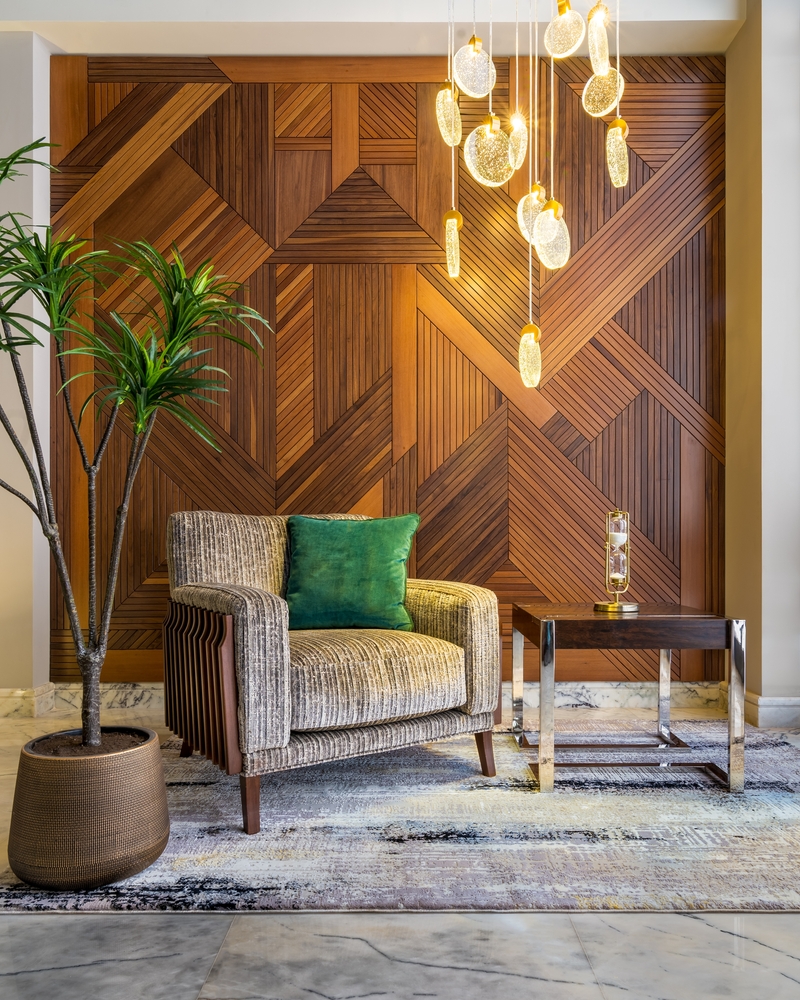
12. Mid-Century Sitting Area

This stunning chandelier is the perfect counterpart to this incredibly unique space. The only thing we love more than this accent wall is these incredible dangling lights!

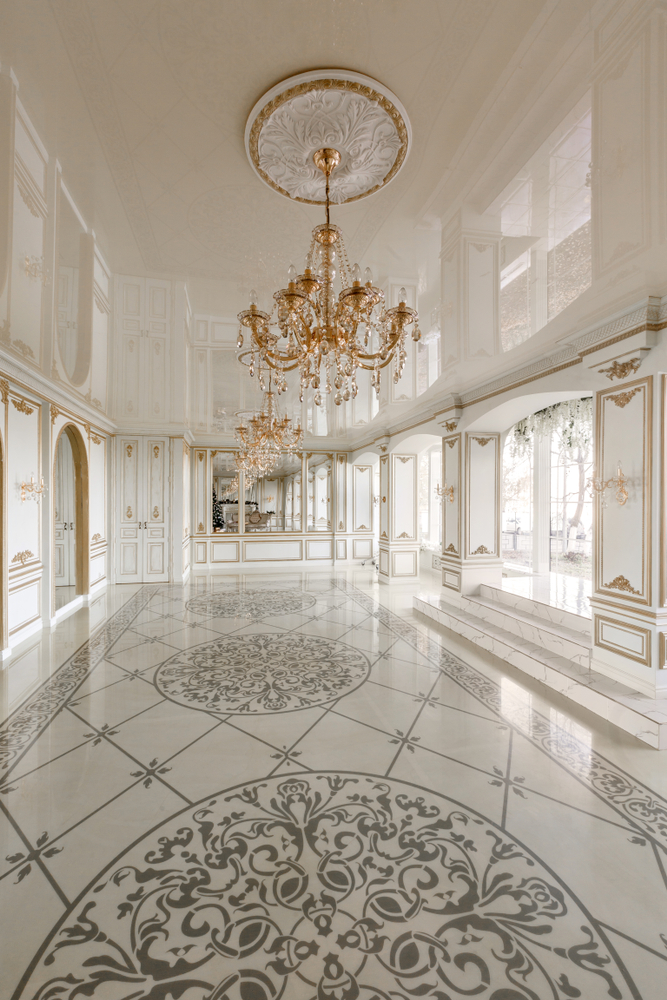
13. Intricate Entryway

This elegant hallway is elevated by ornate gold and crystal chandeliers. Each detail is chosen carefully, and it feels luxurious.

14. Luxurious Bath

This light and airy chandelier leaves this room feeling serene and tranquil–the perfect escape from the stress of everyday responsibilities.

15. Moody Sitting Room

This chandelier lightens up the dark walls and floor with just the right amount of light. It’s the perfect space to entertain guests, or simply unwind at the end of the day. 

16. Modern Cabin Loft

The warm wood accents in this space turn what would otherwise be a modern loft into a cozy cabin-esque retreat right at home. The chandelier hanging low above the conversation area makes this small space intimate and ties the modern and rustic elements together.

17. Stunning Centerpiece 

The last chandelier on our list holds nothing back. Its striking architectural lines draw the eye all the way up to the vaulted ceiling, really showcasing the size of the room. 

It’s not easy to compete with a wall-to-wall view of the ocean, but this chandelier commands your attention without even breaking a sweat. We’re impressed.

——————

Chandeliers can change the look and feel of any space. Ready to find the chandelier of your dreams? Give Western Chandelier a call!


*Some regulations may prohibit hanging lights over a bathtub. Be sure to check out local building codes and the National Electric Code before hanging any lights.

Filed Under: 2022, Ceilings Lights, Chandeliers

Nature-Inspired Lighting for Indoor Spaces

Nature-Inspired Lighting for Indoor Spaces

by admin · Mar 29, 2023

Eco-friendly. Plant-inspired. Natural colors. These well-loved decor trends are giving homes across the world a breath of fresh air by inviting the outside in.

Whether you take care of an army of plant babies or, if your green thumb skipped a generation, you prefer to use nature-inspired shapes, colors, and materials in your design, you’re sure to get some ideas from these beautiful nature-inspired interiors!

Use Your Houseplants 

What better way to make your space feel alive than bringing in something that’s actually alive? If you’re willing to get creative, your indoor lighting and your house plants can work together in tandem to make a design statement that will literally bring life to your space.

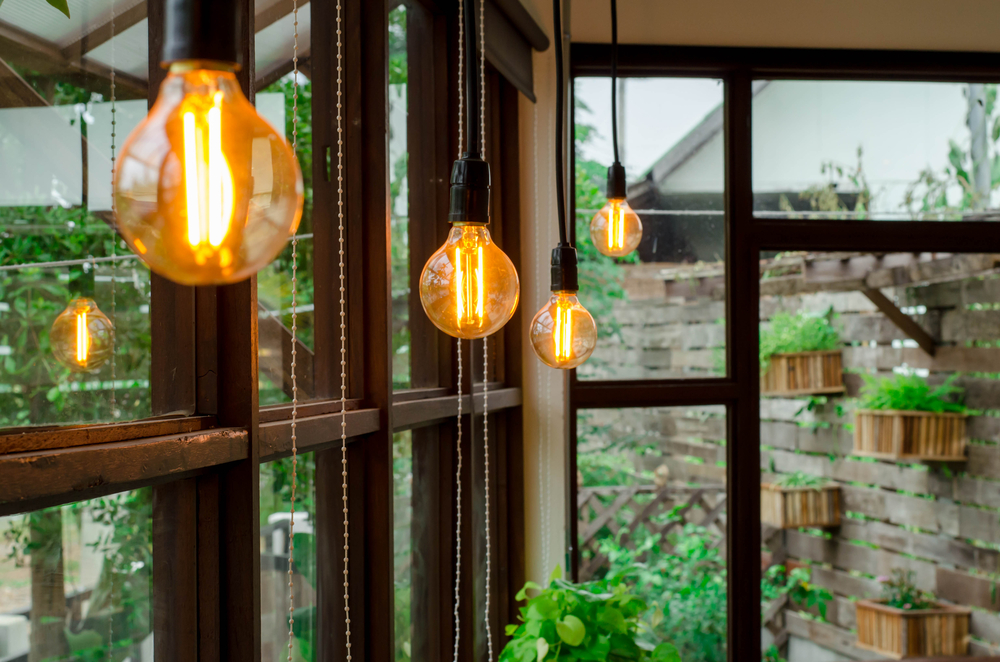
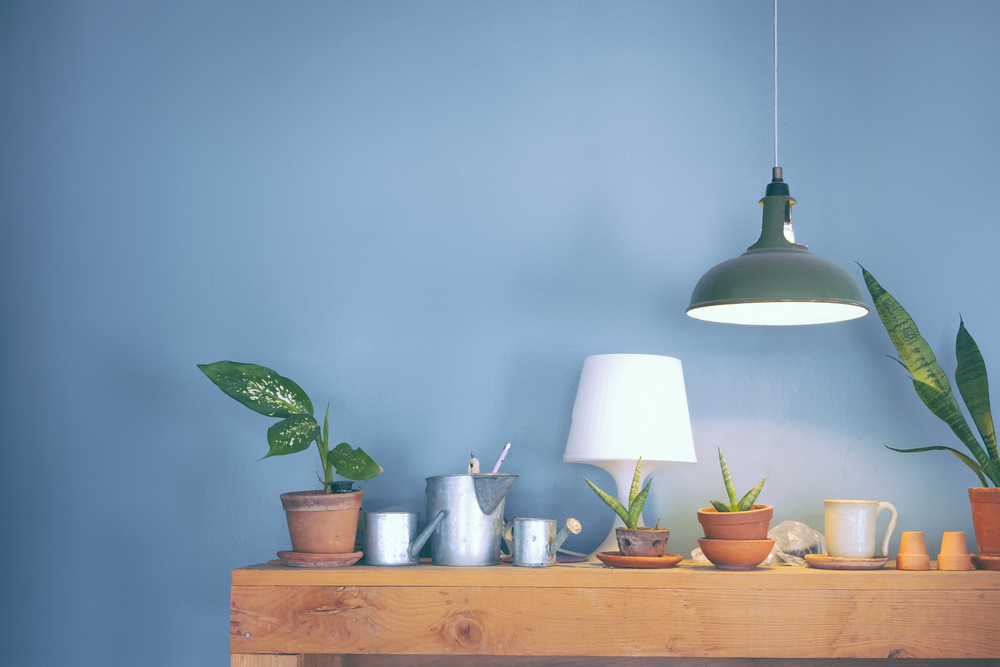
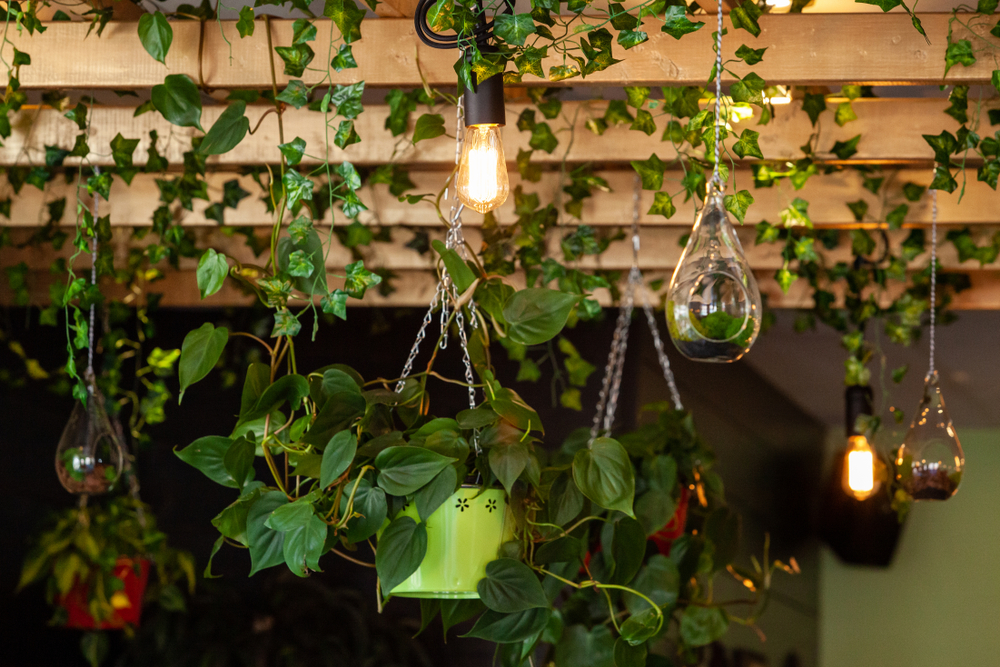
These minimalist bulb lights illuminate plant displays while blending in with the scenery. These industrial lights feel elegant and natural hanging alongside leafy plants and mini terrariums. 

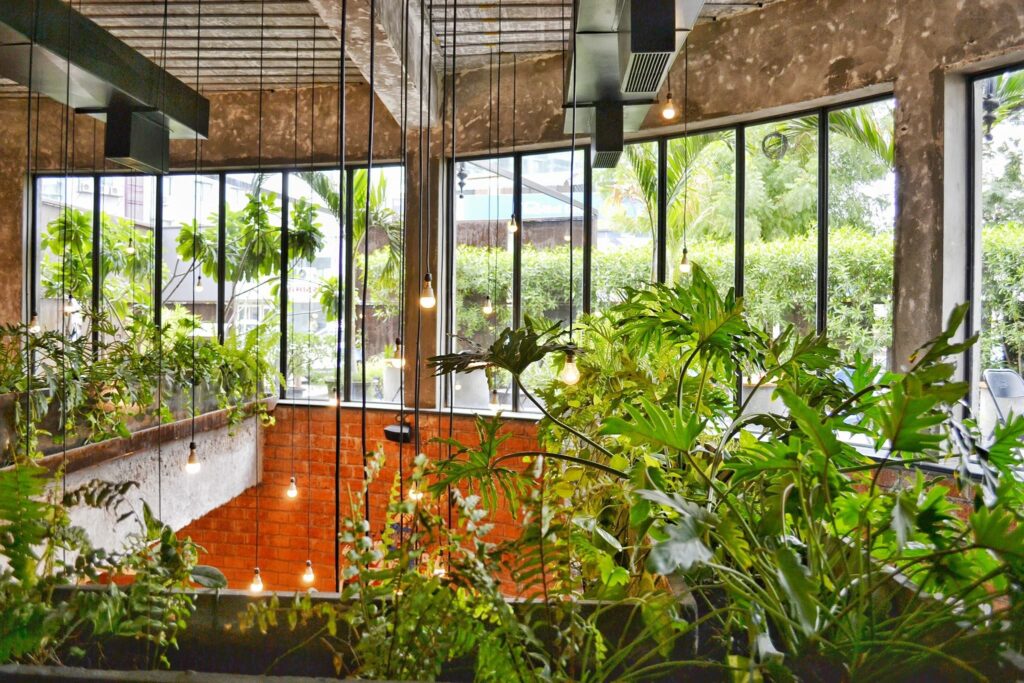
Hanging lights can be combined with natural light from outside as well. This beautiful, open space is accented with simple hanging bulbs. The bulb pendants are long enough to reach eye level, but the cords blend nicely with other lines in the room.

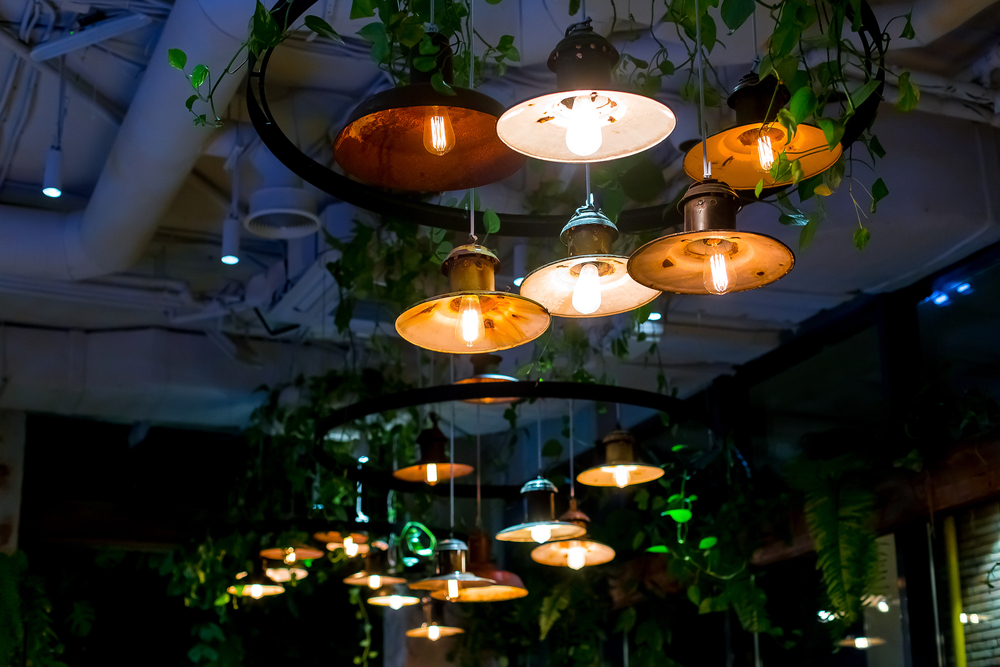
These industrial-feeling pendants show a creative adaptation of a plant and light combination. Vines hanging from the ceiling are an unexpected accent to a warehouse-style ceiling. The vintage pendant lamps tie everything together. 
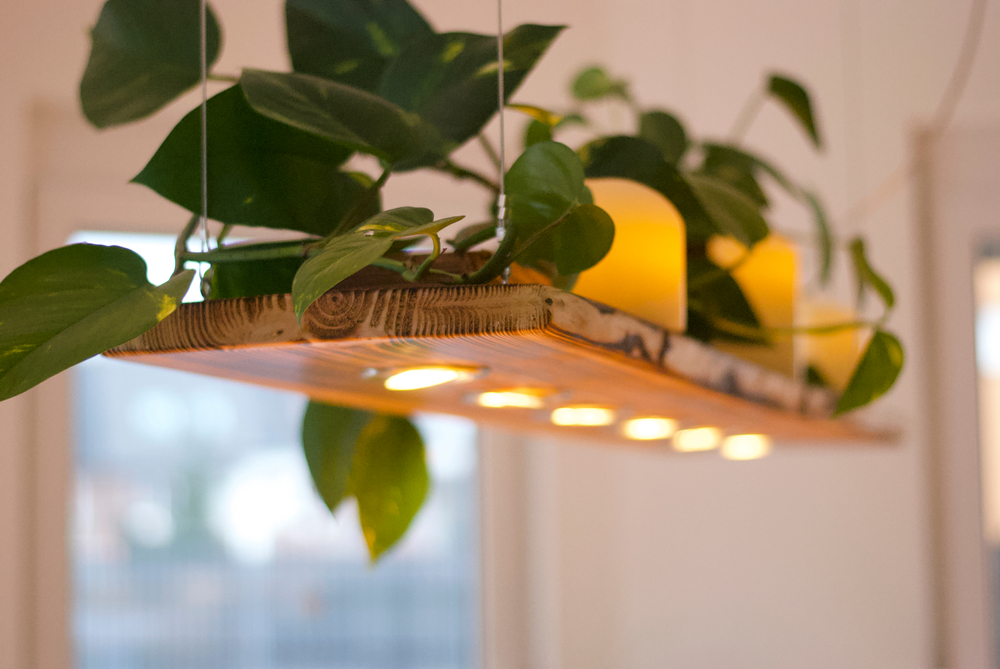
You don’t have to have a lot of surface area to add life to your space. This light fixture doubles as a plant stand, creating a natural, rustic, multi-purpose conversation starter. 

Find Nature-Inspired Lights

If the thought of keeping a bunch of house plants alive gives you hives, not to worry! Instead of tucking your lights amongst your plants, find light fixtures that echo the shapes and textures of the natural world. They’ll give you a great conversation piece and require zero watering.

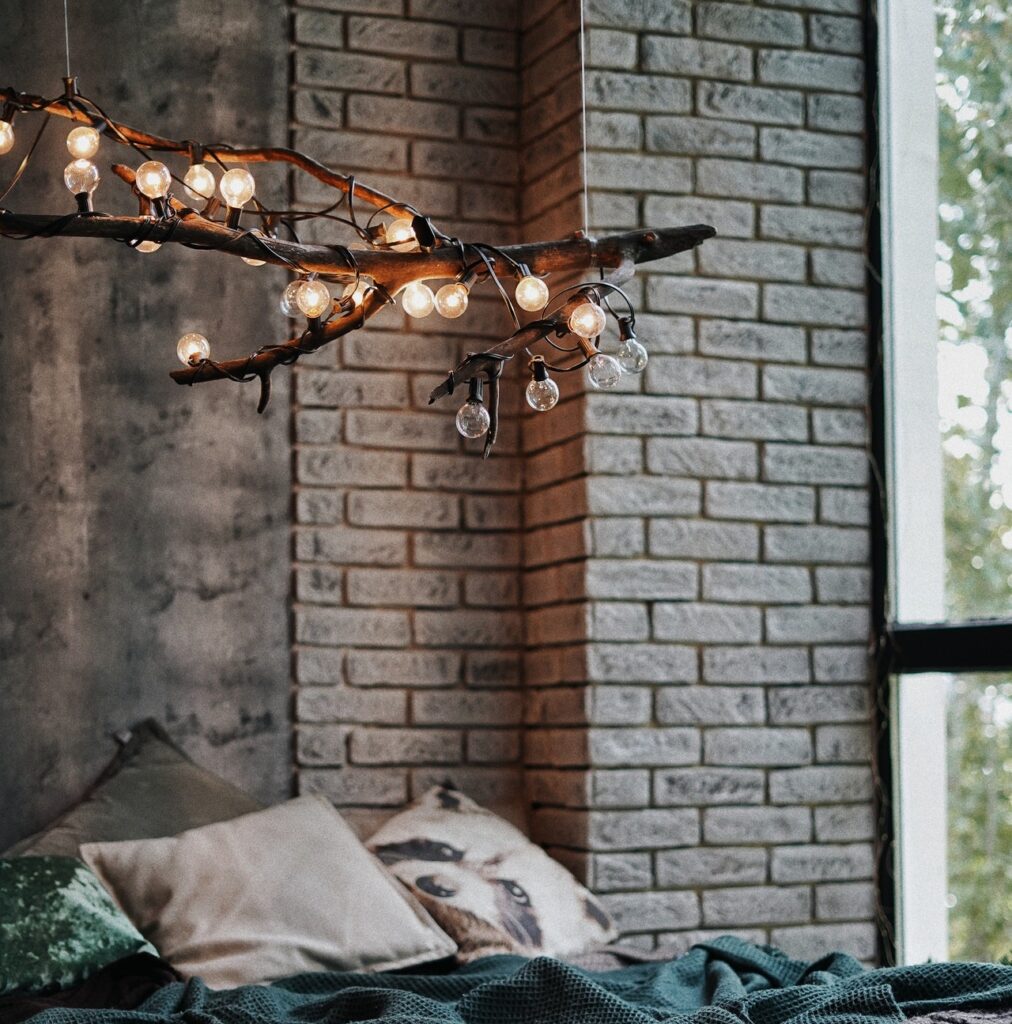
Here’s a natural take on a pendant light. A string of white bulb lights wrapped around a tree branch adds a little fairy magic to a simple, gray room. It’s suspended from a cable in the ceiling to create a “floating” effect. 

This chandelier is a modern take on the tree-branch concept. The multi-directional placement of the bulbs, along with its earthy copper color tones, gives off natural, modern vibes.

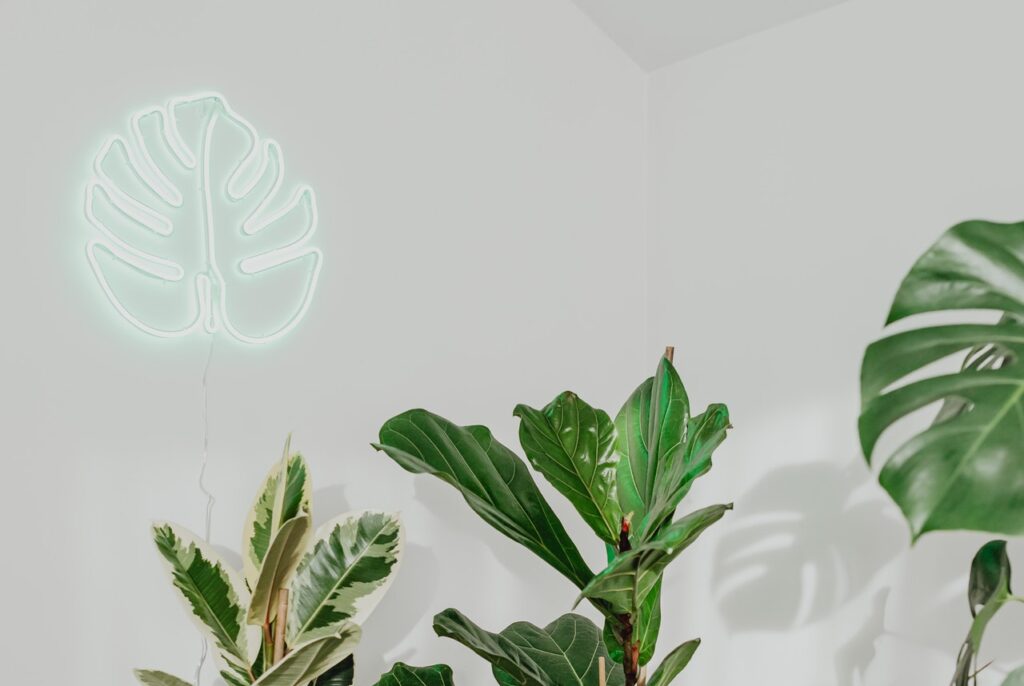
You can find some creative, colorful lights patterned after plants. This vibrant LED wall light makes a statement on a plain white wall. Not only are they a fun pop of color, but LEDs are also energy-efficient — it’s a green double-win. 
Emphasize Natural Colors

What better way to bring the outside in than with a natural color palette? Greens, browns, and blues are staples in the interior design industry for a reason! But – any natural color palette works here. Snap some pictures of the world outside your door, or find a picture of your dream destination, and then head to a lighting showroom to find fixtures that match! 
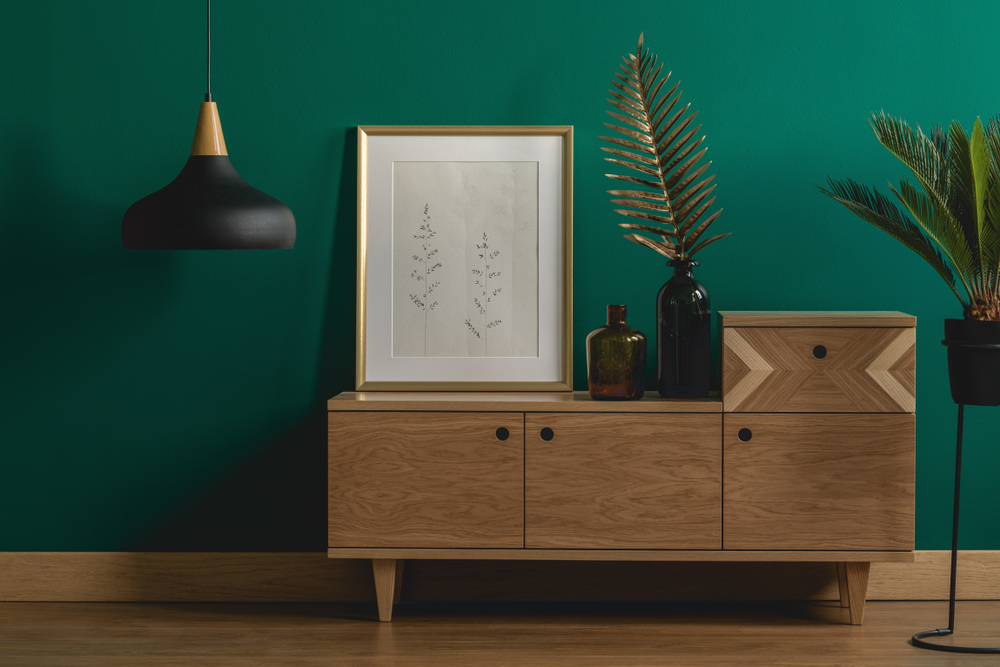
Natural colors with accents of dark blues and greens are a great way to create an outdoorsy feel. This black and gold pendant light creates a perfect balance of color in front of a forest green wall.

These pendant spheres are also a great example. The gold and cream lights are soft, neutral, and subtle, which lets the room’s natural wood textures shine. 

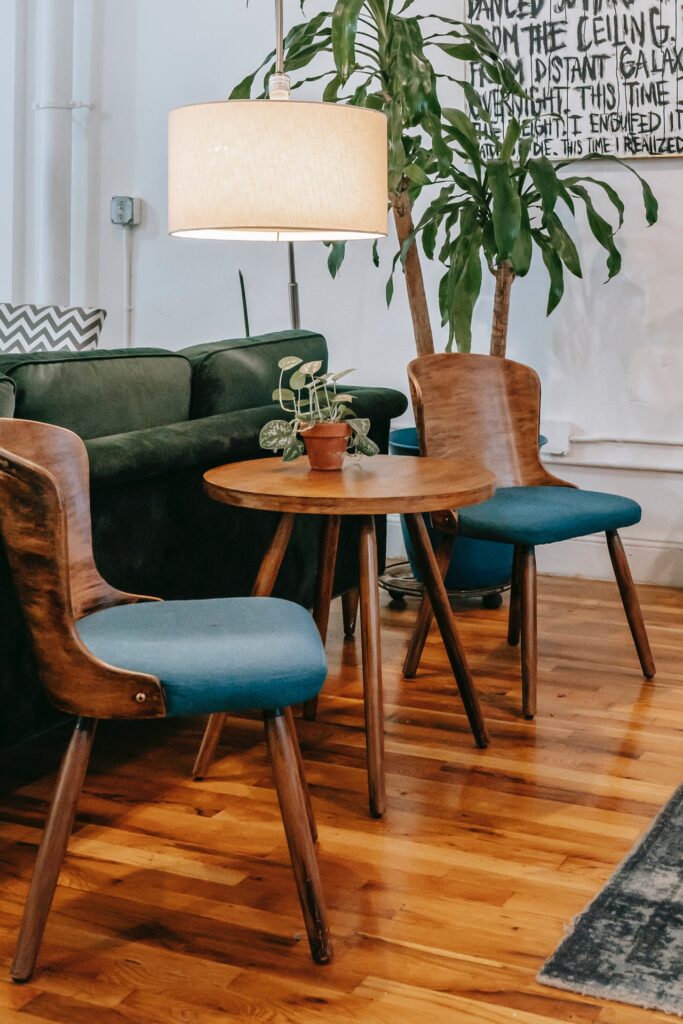
Lampshades are also easy to find in natural colors. They add a beautiful, polished touch without being too busy or elaborate. This hanging lamp shade shows how beige can accent a room full of plants, wood, and other natural elements. 

These are some classic, basic lamp designs. Next to other, more eccentric lamp styles, they might not be noticeable. Next to a deep blue wall, however, they stand out. 

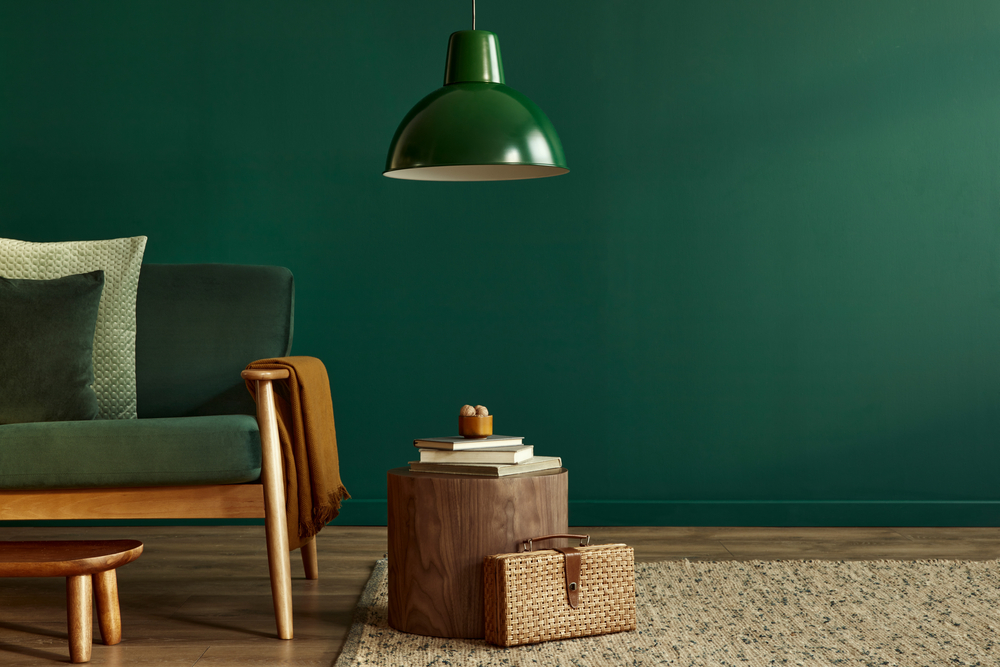
A green pendant lamp with a green wall and green furniture might seem like a lot, but it works. Having various shades of the same color adds a fun pop of personality. 

Include Natural Materials

Your light fixtures don’t have to be synthetic and industrial just because they’re connected to the grid. Natural materials such as rattan have come back in a big way. 

This cozy living room is filled with soft, natural materials. The wood lamp brings a natural warmth, and a bit of balanced structure, to this comfy space. 

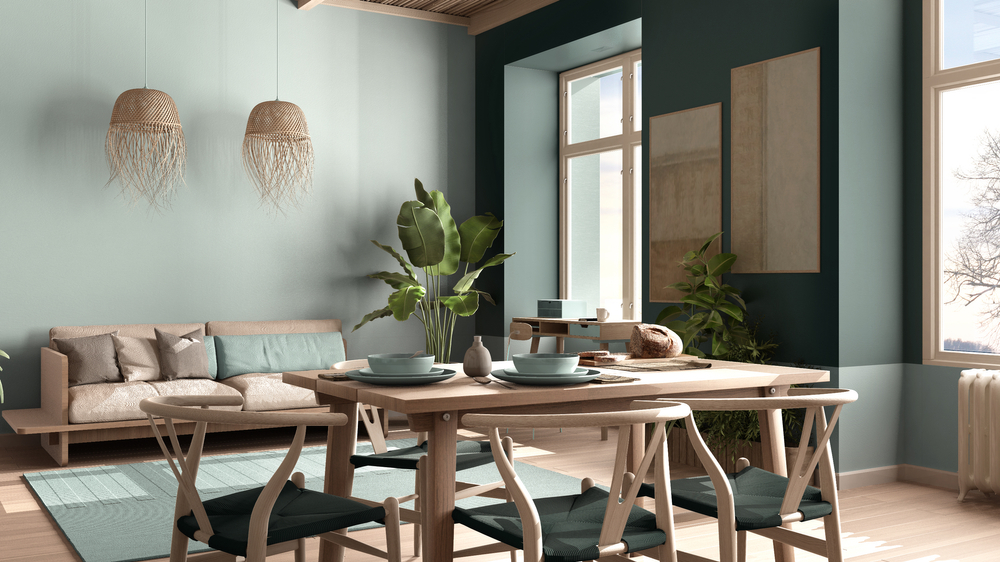
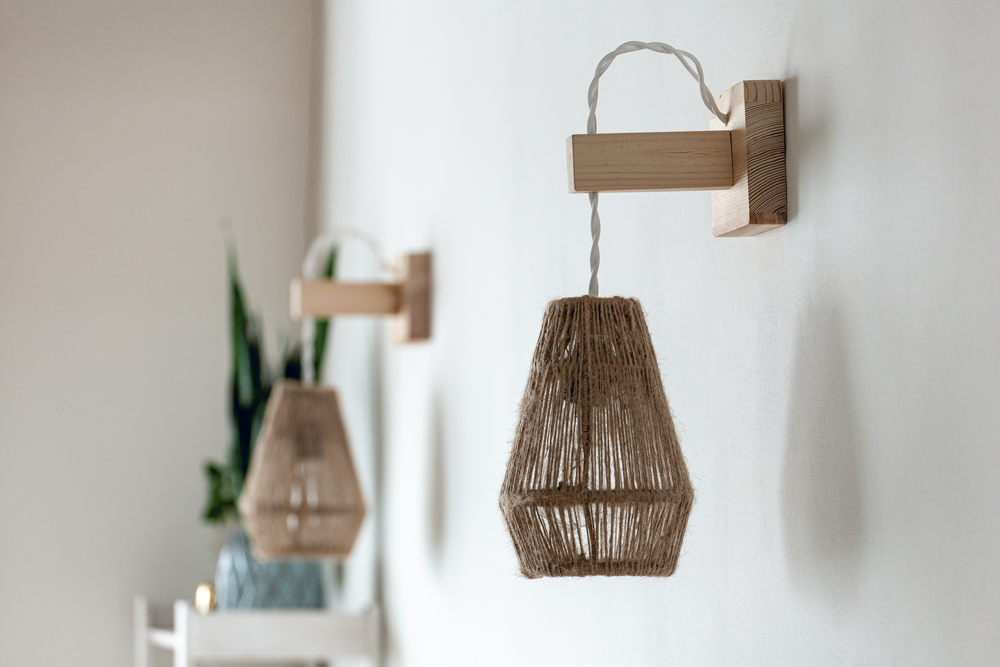
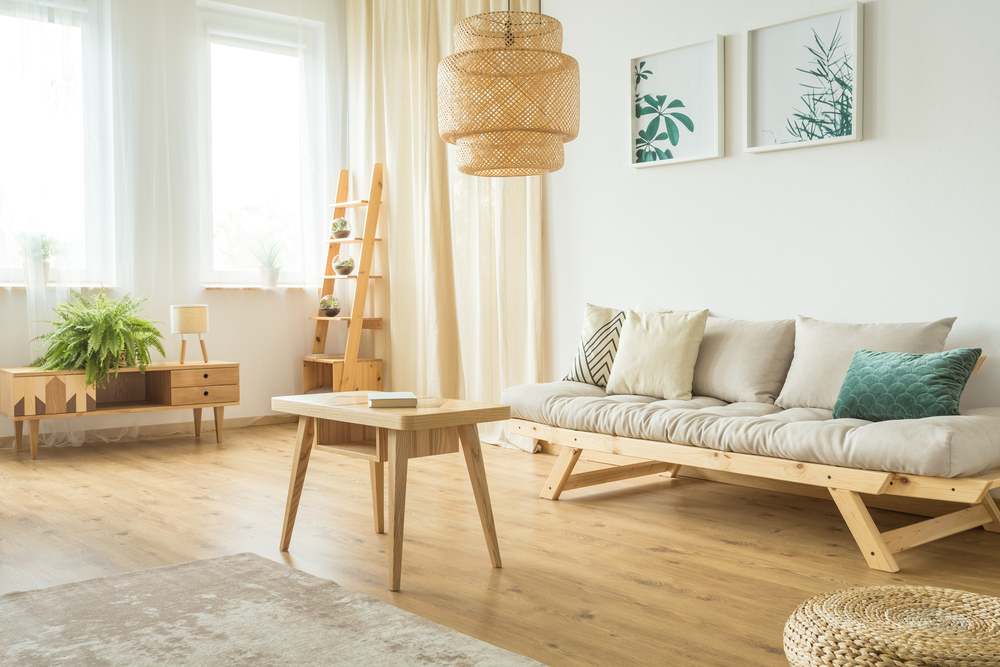
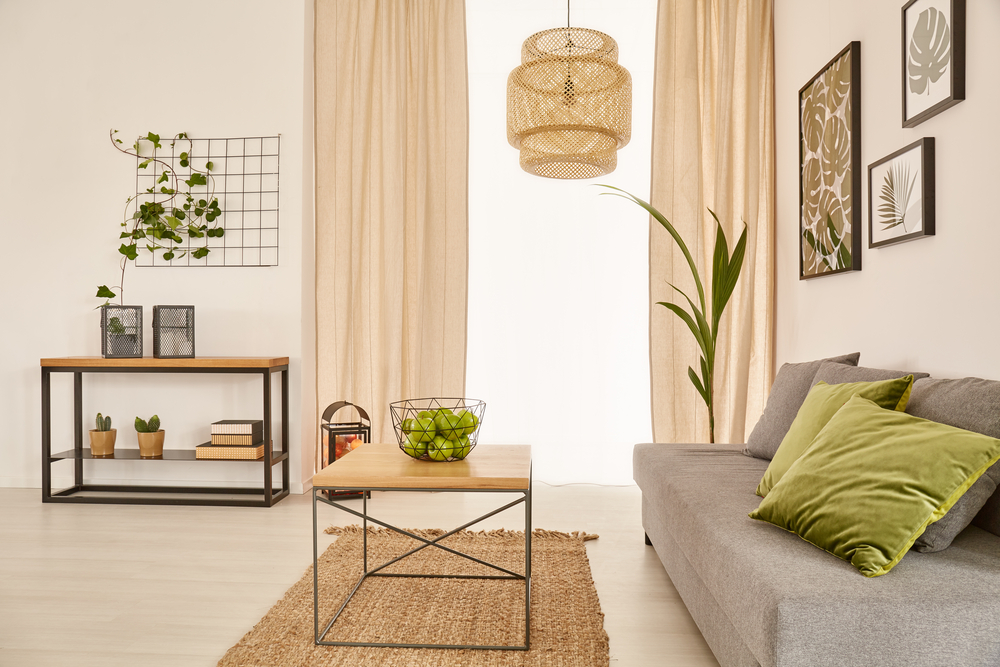
Some other popular materials include woven straw, wicker, or bamboo. This woven shade is a gorgeous shape and color. It also lets enough light through to illuminate all the other natural features of the room. 

Woven shades are a great way to bring nature into your lighting. They illustrate that the size, shape, and color can vary based on the design of the room they’re going in. They can also be paired up to add another layer of design. 

Ceramic is a beautiful natural material for a light fixture. These two domed ceramic pendants give off a warm glow that’s perfect for a cozy dinner.

—————–

Drawing inspiration from nature to decorate our homes isn’t a new idea. It’s lasted for centuries because it works – we love to bring the outside in! There’s no right or wrong way to make it work for you, so find something you love and get started! 

If you’d like an extra hand finding just the right natural touch for your next lighting project, our lighting experts would love to help!. Give us a call, or stop by our showroom for the breath of fresh air that comes with a lighting update. 

Filed Under: 2022, Styles & Trends

« Previous Page
Next Page »

Copyright © 2026