• Skip to primary navigation
  • Skip to main content

Western Chandelier

  • Buying Guides
  • Styles & Trends
    • Bathroom Lights
    • Ceiling Fans
    • Ceiling Lights
    • Lamps
    • LED Lights
    • Outdoor Lights
    • Smart Lights
    • Wall Lights
  • Wellness & Safety
  • Shop Products

admin

Chandeliers vs. Pendant Lights: What’s the Difference?

Chandeliers vs. Pendant Lights: What’s the Difference?

by admin · Mar 22, 2023

Chandeliers and pendant lights both make a statement in any space. Because they’re very similar, they are often confused for one another. While they both hang down from the ceiling, there are a few key differences you need to know that can help you choose what’s best for your home.
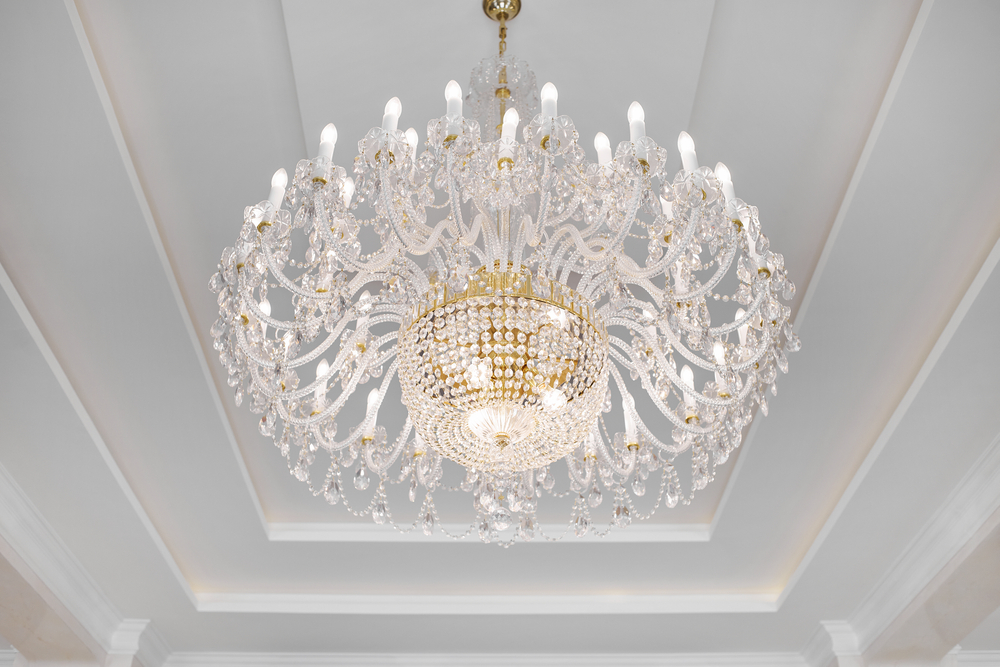
 

Chandelier

A chandelier has a central body with multiple lighted branching arms. It usually hangs suspended from a chain.
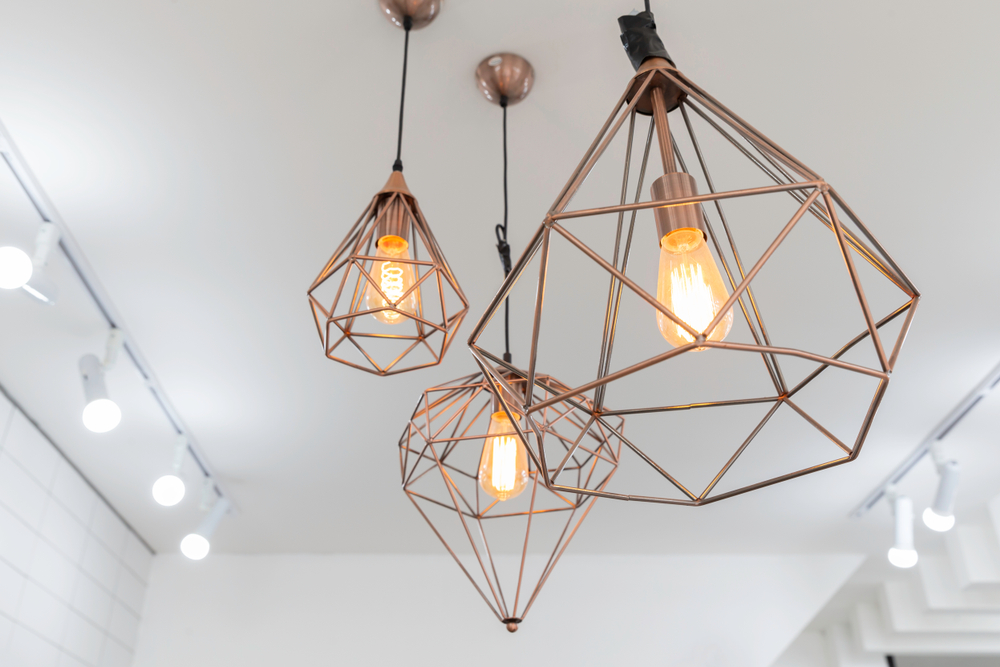
 

Pendant Light


A pendant light has a cord or chain with one light attached. Sometimes pendant lights have multiple lights, but if they do, they’re usually surrounded by a structure 

like the one pictured above.


Similarities and Differences

Style

The biggest difference between a chandelier and a pendant light is how it looks. Chandeliers are more intricate and ornate. They make a big statement and add elegance to a room. Chandeliers will be the center of attention. Pendant lights come in a wide variety of shapes and styles. When compared to a chandelier, pendants are usually smaller and have a cleaner, more minimal feel.

Use

Chandeliers and Pendants can both be used in any room in the house! Chandeliers are usually used to provide ambient light (illuminates a space evenly) in large spaces, but their ornate designs can create shadows. Because there are many lights on one chandelier, you may only need one to illuminate a whole room. Pendant lights are better for direct lighting (over a kitchen table, for example). Since there’s usually only one bulb per fixture, smaller pendant lights are often used in groups, like a set of 3 over a kitchen island.

Cost

While there are exceptions, chandeliers tend to be much more expensive than pendant lights. Chandeliers also often require professional installation due to their size and weight, which may add extra to your total bill. On the flip side, a handy homeowner can sometimes hang a pendant light by themself! If you’re comparison shopping, don’t forget to consider the number of fixtures you’ll need when calculating cost.

Maintenance

When choosing between these two statement fixtures, be sure to consider maintenance. Since pendant lights are simpler, they are usually easier to clean and have simpler lightbulb changes. On the other hand, chandeliers can be more challenging to maintain because of their delicate design. If you’re looking for easier maintenance, a pendant light is your best bet.


Pros and Cons

Chandeliers and pendant lights are both great options, but to help you make up your mind, we rounded up all of the details above here as some quick-reference pros and cons.
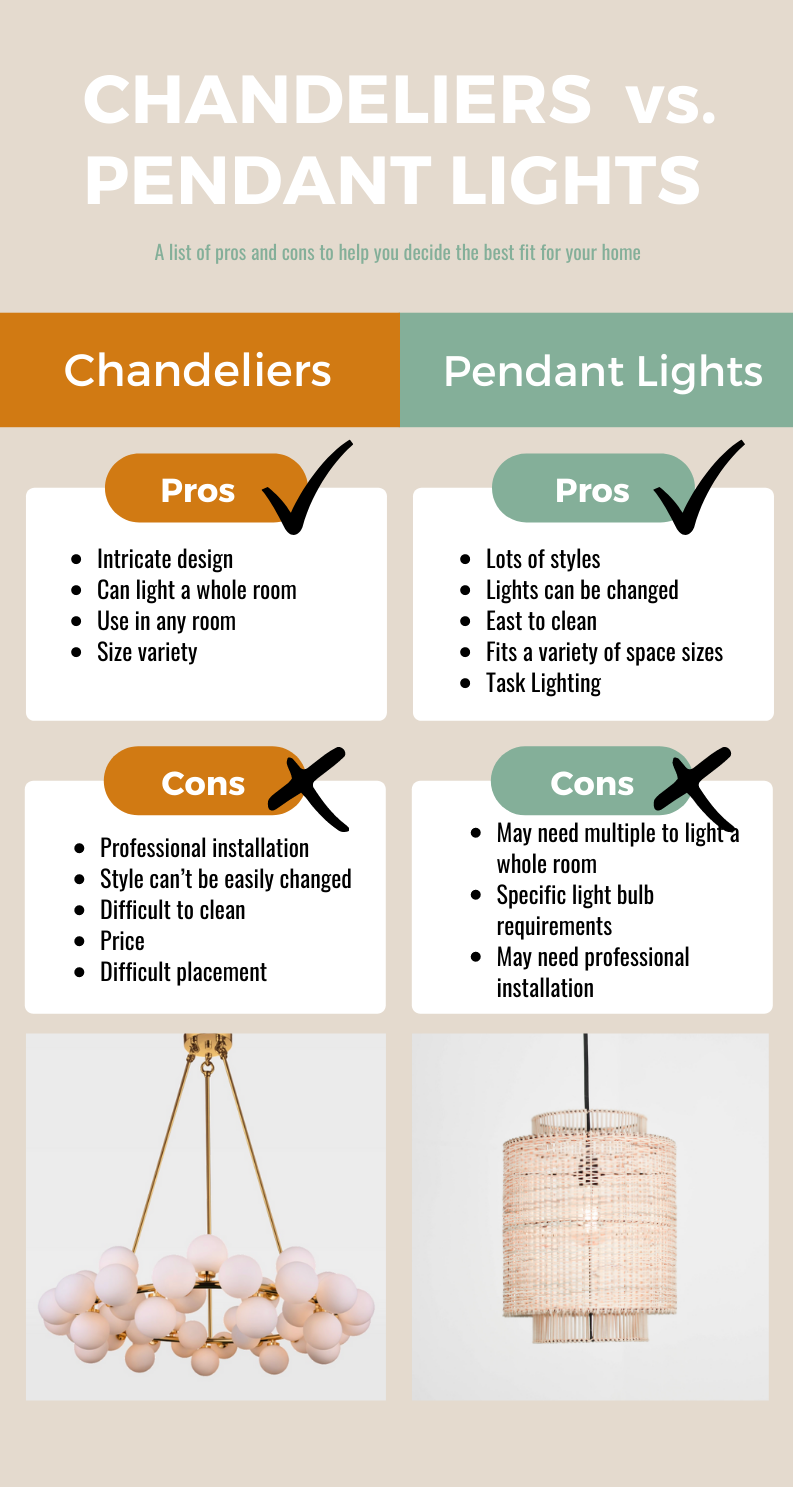
No matter which you choose, chandeliers and pendant lights will both make a statement and show off your style! If you’re still not sure which is right for you, give our experts at Western Chandelier a call for personalized advice!

 

Filed Under: 2022, Informational

 How Light Bulbs Changed the World

 How Light Bulbs Changed the World

by admin · Mar 15, 2023

Imagine waking up to the light of the sun in 1850. It’s summertime, around 6 am. You go downstairs, stoke the fire and get breakfast together as your children start to wake. Outside thunderhead clouds are heading towards you, darkening the land. Lighting a few lamps, you prepare for a quiet afternoon inside, knitting and sewing with your daughters while the boys wrestle in the flickering light. It rains all day. You’re running low on kerosene oil, so off to an early bedtime. Maybe tomorrow will be brighter, less restricted.

In a world of modern conveniences, it’s easy to take something like our control of light for granted. Did you know that lightbulbs have been around for less than 150 years? Revisiting the history of home lighting may inspire you to see your home with new eyes.

Before the Light Bulb

For thousands of years, humankind has lived according to the cycle of the sun and moon. The earliest humans relied on fire and learned to control it over time. Wax and oil made fire portable and practical through the use of torches, candles, and lamps.

This “domestication” of fire spurred innovation. There were more hours to use in the long dark winters, which gave humans time to craft and study. Still, firelight wasn’t nearly as bright or even as the sun. It produced a lot of heat, required care to keep alive, and created black smoke and soot. 

Fire was far from a perfect lighting solution. Inventors around the world continued to pursue a better solution without much success. It wasn’t until the 19th century that inventors saw progress with electricity and light. 

The Invention of the Light Bulb

The first successful version of electric light was achieved in 1835. This bulb, called the arc lamp, was invented in London and was popular in street lighting. Although it was a huge step forward in the development of electric light, there were still plenty of technical problems to solve. The arc lamp was extremely bright and hot, so it had to be on high towers for safety. The glaring light made it impossible to use in the small rooms of private homes. Even in the 1800s, critics were wary of the invasion of technology into private life. More work needed to be done.

More than forty years later, Thomas Edison successfully created a light bulb that wasn’t excessively hot or bright. He invented the first incandescent bulb in 1879 in New Jersey. These bulbs used electricity and gas to sustain the slow burn of filament. The light was powerful enough to light a room. 

The incandescent bulb changed the world. The ability to have consistent, clean light on demand meant that hospitals, schools, governments, businesses, and the public could control their work. Its use was able to increase health, safety, and productivity. 

It wasn’t until the mid-20th century that incandescent bulbs were commonly used in middle-class homes, decades after the death of the brilliant inventor Edison. The evolution of electric light was far from over. As incandescent light bulbs became commonplace, energy consumption greatly increased and we began to record harmful effects to the climate. Once again, we needed a new light solution.

Evolution of EcoFriendly Bulbs

Now imagine it’s 1950. You’ve moved into a new home in “Leave it to Beaver” suburbia. White picket fences, green lawns, neat houses, all wired to the now publicly available electricity network. You pause and think back on your childhood, the challenges of life before this technology. You smile. This is a new world for your children. You flip the switch on in the family room to spend some quality time together.

As the general population adopted the use of electric light, energy consumption skyrocketed. This increase in demand for energy production started to impact the environment, as the most common energy production was the burning of coal and natural gas. The effects of global warming came to a head and we looked for ways to reduce our impact on the world. Although the groundwork for fluorescent and LED bulbs was laid long before our awareness of global warming, they turned out to be the key to energy-efficient lighting. 

Fluorescent Bulbs

Several inventors got to work on fluorescent lighting, the process of passing electricity through the gas to create light. Even Thomas Eddison had a version of fluorescent light, although his was never mass-produced. George Inmann of General Electric finally secured a patent for a commercial version of the fluorescent light. This light was first sold in 1938, around the same time the incandescent light became a common household appliance. 

Fluorescent light bulbs were first designed as long tubes, typically used in offices. A modified design adapted them for home use: a slim spiral tube the size of an incandescent bulb. These bulbs grew popular in the early 2000s. Fluorescent bulbs are much more energy-efficient than incandescent bulbs. Yet, many were wary of their use in homes because they contain mercury. Many families wanted to avoid the risk of broken bulbs.

LED Bulbs

The technology behind LEDs (light-emitting diodes) began back in 1907, when a British man named Henry Joseph Round experimented with a cat’s whisker and silicon carbide, somehow generating light. Several other inventors tried to harness LEDs, first succeeding in creating invisible infrared LEDs, then finally achieving visible red light in 1962.

LEDs have evolved to emit every color, are highly adaptable, and maintain popularity today. LEDs use a microchip to produce light instead of burning filament or gas, and are popular in both bulbs and strip lighting. The microchip design means LEDs are colorful, adding “fun” and “versatility” to “eco-friendly”. And, no mercury!

Light in Creating a Home

Back to today. Your home is custom lit in every space. It’s a beautiful summer night. The kids are in bed, the soft, warm glow of fairy lights giving them comfort. You lock the front door and see your walkway lit by solar-powered footlights. You turn off the lights in the kitchen, except for the cabinet lighting, which offers a gentle glow into the living room. You snuggle up with your partner to catch up on your favorite show.

We live in an era of ultimate convenience. Gone are the days when the weather or seasons dictate what we do. Modern technology has allowed us to use light to optimize health, safety, and design.

Despite all of the incredible things the light bulb has done for us, we will never fully be able to remove ourselves from the influence of the cycles of the sun and the moon. Much like our ancestors who lived life by the firelight, our bodies still rely on the cues of daylight and dusk to regulate our hormones and sleep cycle.

Modern innovators have developed a spectrum of bulb “temperatures”. The temperature, or wavelength, of light mimics either sunlight or firelight. Bright, cool light acts like the sun and is excellent for workspaces, like kitchens and home offices. Softer warm light sources are closer to firelight, and help our bodies to relax and prepare for sleep. It’s excellent for bedrooms, reading lamps, and by bathtubs. 

The right light sources also help to protect our family and home from accidents and theft. Strip lighting along stairs is great for preventing falls. Motion-activated lights outside have protected families for decades by preventing nighttime theft.  

Beyond function, light design controls the feel of your home. Two hundred years ago, pioneers and frontier families had the same, functional log cabin. Today light gives us all the opportunity to customize our homes to our family needs and interests. Simply upgrading the existing, builder-grade lights makes your home feel like it’s yours. Strip LEDs under your kitchen cabinets increase visibility, make it feel bigger, and upgrade it to a first-class workspace. Installing pendant lighting in the bedroom increases style and decreases chord clutter. A unique chandelier brightens your home office and helps you relax in a space that’s really you.

It’s incredible how much light has changed the world.

——————–

Talk with the Pros

With all the technology and styles available to you, it can be hard to know how best to take advantage of this era of light. Western Chandelier offers a great selection of not just bulbs and fixtures, but also professional lighting advice from experts in the lighting industry. If you’re ready to start lighting your home, stop by our showroom and we’ll help you find exactly what you need.

Filed Under: 2022

Upgrading Your Lighting on a Budget

Upgrading Your Lighting on a Budget

by admin · Mar 14, 2023

All the Tips, Tricks, and Secrets You Need to Make Your House Shine on a Dime

If it’s been a while since you redecorated, your current home decor probably isn’t speaking to you anymore. When you’re short on time, updating the lighting is one of the fastest ways to make your home look, well, brighter. But, when you’re on a budget, replacing everything in the house just isn’t the right call. The good news is – you don’t have to! Here’s a few easy, creative, and budget-friendly ways to make your home feel bigger and brighter… without breaking the bank.

1. Swap Your Light Bulbs

Many people blame an old fixture for their lighting woes, when really it’s the bulbs to blame. Try swapping out your old bulbs with a fresh set of brighter LED bulbs!

While LED lights may cost more upfront, they use at least 75% less energy – which means they can give off more light and use less power. They also last up to 25 times longer than traditional light bulbs, so they’ll last for years before they need to be replaced. 

2. Do it Yourself

The cost of lighting installation can eat away at your budget quickly, but it can reduced if you’re willing to do a little research and put in some work. Installing lighting yourself can give you some extra cash to get lights you love.

Before tearing out any fixtures, educate yourself on the proper safety precautions! If you’re unsure about doing it yourself, don’t forget to budget for the professional help you’ll want!

3. New Shades, New Me

If your light fixture comes with shades – whether they’re glass, fabric, or metal – you might be in luck! Did you know you can replace the shades or globes on most fixtures that have them? A new set of shades is WAY cheaper than buying an entirely new light fixture, and it will make just about any fixture feel brand new again! With a like-new fixture, your space will match your style, leaving you (and your wallet) feeling happier.

4. Refinish Your Fixture

Another alternative solution to buying a new light is changing the finish of your existing fixture. With a little rub n’ buff and a handy youtube tutorial, your light will look totally different! This may need some touching up down the road, but when you need a quick fix to get you by until you can invest in a higher-quality fixture, a little DIY magic can help stretch your money. A little finish can take your fixture from outdated to updated while keeping your budget happy. 

5. Mirror, Mirror

In our opinion, quality lighting makes the biggest difference in a home, but adding mirrors can also increase light–if they’re well-placed. Hanging a mirror near a light or window can help reflect light, making the space look brighter and bigger. That reflected light can go a long way in lighting up a dim room!

6. Focal Point Focus

Another way to make your space look upscale is picking a more expensive light to be a focal point, while adding other less spendy lights to light up the room. The eye will be drawn to the focal point and won’t notice anything else! To start, install a chandelier to draw attention away from any existing recessed lights. Throw in a floor lamp where you need some extra lighting and–voilà! Your eye will be drawn to the chandelier, but the room will still be beautifully lit.

7. Add Lamps, Lamps, and more Lamps!

When in doubt, add a lamp! They’re cheaper, require little to no installation, and are a great design piece. Tabletop lamps make great decor for your tablescape and can light up a workspace. Floor lamps create a homey conversation area in a living room. Lamps are a super versatile, budget-friendly option to give just the touch of light you need.

—

We know that when you’re on a budget, every penny you spend matters! To be sure you’re spending all of them wisely, give us a call! We’ll match you with the best lighting solution for your budget and save you money so that you can get lights you love.

Filed Under: 2023, Bulbs, Buying Guides, Ceiling Lights, Lamps, Light Bulbs, Mirrors, Styles and Trends, Wellness & Safety

« Previous Page

Copyright © 2026